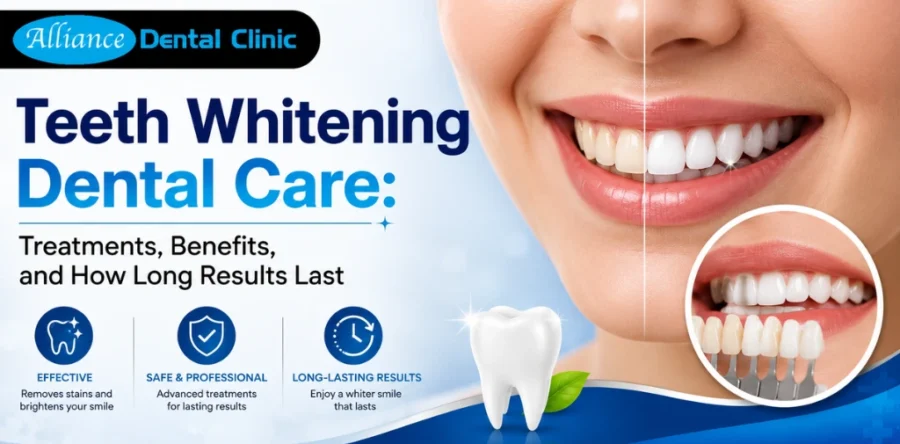
Teeth whitening dental care has become one of the most sought-after treatments in modern dentistry — and for good reason. We live in a world where our teeth face a constant barrage from coffee, red wine, and that highly pigmented turmeric latte you tried once because a wellness influencer swore by it. It’s no wonder that “yellow teeth treatment” remains one of the most frequently searched terms in cosmetic dentistry.
But before you buy a sketchy blue-light gadget off a random internet ad, let’s talk about how to safely achieve stain-free teeth without melting your protective enamel layers. At Alliance Dental Clinic, we believe a smile makeover shouldn’t double as a horror movie for your nerve endings. If you are exploring your options, this guide breaks down everything you need to know about professional teeth whitening dental care, what to expect during treatment, and how to keep those pearly whites radiant without the dreaded post-bleach “zingers.”
1. Why Teeth Turn Yellow: The Foundation of Teeth Whitening Dental Care
Before diving headfirst into a dental whitening procedure, it helps to understand why teeth change color in the first place. Your tooth structure consists of multiple layers, and staining happens in two completely distinct ways:
- Extrinsic Stains: These live on the surface of your enamel. They are primarily caused by dark liquids, tobacco use, and a buildup of daily surface pigments that regular oral hygiene might miss. Regular plaque and stain removal routines keep these at bay.
- Intrinsic Stains: This is discoloration inside the deeper tooth structure. It happens as we age because the outer enamel naturally thins, allowing the yellowish dentin layer beneath to show through. It can also stem from past dental trauma or specific childhood medications.
A comprehensive whitening consultation helps isolate exactly what kind of staining you have. This initial check ensures you don’t waste time on treatments that won’t give you the results you want. Learn more about our complete range of dental services in Milton to find the right solution for your smile.
2. Professional Teeth Whitening Dental Care vs. At-Home Kits: The Real Differences
Is it worth investing in teeth whitening by a dentist, or should you stick to drugstore strips? Let’s look at how professional dental care solutions stack up against over-the-counter options.
| Feature | In-Office Dentist Teeth Whitening | Over-the-Counter At-Home Kits |
|---|---|---|
| Peroxide Strength | High Concentration (15% to 43%) | Low Concentration (3% to 10%) |
| Treatment Speed | Whiter teeth in roughly 60–90 minutes | Weeks of daily wear for mild changes |
| Gum Protection | Custom light-cured barriers applied by hand | None (gel leaks freely onto delicate gums) |
| Predictability | High; tailored to your exact dental aesthetics | Low; a one-size-fits-all approach |
The Power of Professional Teeth Whitening Dental Care Supervision
The primary benefit of dental teeth whitening is the medical-grade strength of the whitening agent. A cosmetic dentistry specialist uses concentrated hydrogen peroxide or carbamide peroxide. Because these professional formulas are potent, they require strict enamel protection protocols and localized gum shields that you simply cannot duplicate with a retail box at home. Clinical standards outlined by the Canadian Dental Association show that supervised whitening dramatically reduces the risk of long-term enamel erosion and soft tissue chemical burns.
3. The Teeth Whitening Dental Care Procedure: What to Expect at Alliance Dental
If you choose teeth whitening by the dentist, you won’t be left guessing what happens next. The clinical process at Alliance Dental Clinic is streamlined and designed for maximum comfort:
Step 1: Clinical Evaluation (The Whitening Consultation)
Your teeth are carefully examined for underlying issues like active cavities or gum recession. Bleaching a tooth with an open cavity causes extreme pain, making a clean bill of health an absolute prerequisite. If you are experiencing any dental discomfort, visit our dental emergency page before proceeding with whitening.
Step 2: Surface Preparation (Plaque and Stain Removal)
A hygienist performs a quick polish to clear away surface debris. If the whitening gel is blocked by plaque, your final results will look splotchy, uneven, and dull.
Step 3: Isolation and Protection (Safeguarding Gums)
A comfortable retractor holds your lips back, and a specialized protective gel or liquid rubber dam is painted over your gums. This keeps the powerful bleaching agent exclusively on your teeth.
Step 4: Gel Application and Activation (The Brightening Phase)
The professional whitening gel is applied directly to the front of your teeth. It is left on for 15-to-20-minute intervals, sometimes activated by a specialized dental light to speed up the molecular breakdown of deep stains.
4. Teeth Whitening: How Long Does It Last?
Let’s address the question everyone asks before booking an appointment: teeth whitening how long does it last?
Whitening is not a permanent fix. However, long-lasting teeth whitening dental care results are highly achievable if you understand the timeline and commit to basic maintenance.
- Professional Treatments: Usually maintain their brightness for 1 to 3 years, depending heavily on your day-to-day lifestyle choices.
- Over-the-Counter Strips: Typically begin to fade within 2 to 4 months.
Teeth Whitening Retention and Maintenance
Your teeth act like microscopic sponges right after a bleaching session. To maximize your teeth whitening retention, follow the “White Diet” for the first 48 hours to manage what to expect after teeth whitening treatment. Avoid anything that would permanently stain a white cotton t-shirt, such as dark coffee, soy sauce, blueberries, and red wine.
For continuous teeth whitening maintenance, consider drinking dark beverages through a straw to minimize direct contact with your front teeth, and never skip your bi-annual professional dental cleanings. Our preventive dental care program is designed to protect your whitening investment long-term.
5. Teeth Whitening Dental Care and Sensitivity: Why It Happens and How to Stop It
If the thought of drinking cold water after a whitening treatment makes you wince, you aren’t alone. Teeth whitening tooth sensitivity is an incredibly common side effect that stops many people from achieving their dream smile.
Causes of Tooth Sensitivity After Whitening
The peroxide whitening agents temporarily dehydrate your teeth and open up microscopic pathways in your enamel called dentinal tubules. These tubules lead straight to the nerve center of your tooth. When cold air or hot coffee hits those open pathways, your nerves send a sharp warning signal to your brain.
The good news? Permanent sensitive teeth after whitening are incredibly rare. Independent clinical studies show that this minor discomfort almost always subsides within 24 to 48 hours as your saliva naturally remineralizes the enamel and closes those tiny pathways back up. According to the American Dental Association (ADA), professional whitening performed under dental supervision is safe and effective for most patients.
Is Teeth Whitening Safe for Sensitive Teeth?
Yes, provided it is handled by a professional teeth whitening dentist. If you have inherently sensitive teeth, an over-the-counter kit can cause significant pain because you cannot adjust the chemical delivery. A dentist can customize the gel concentration, shorten exposure times, or use built-in desensitizing agents to keep you comfortable.
Reducing Sensitivity After Whitening: Pro Tips
If you are wondering how to reduce tooth sensitivity after whitening, follow this quick checklist compiled by our clinical team:
- Pre-Treat Early: Brush with a desensitizing toothpaste containing potassium nitrate for two weeks before your appointment to desensitize the nerve endings.
- Watch the Temperature: Stick to room-temperature food and drinks for the first 3 days post-treatment.
- Ditch the Extra Whitening Products: Avoid using whitening mouthwashes or highly abrasive whitening toothpastes right after your treatment; they will only irritate exposed tubules. Use a soft-bristled toothbrush instead.
6. The Psychological Benefits of a Smile Makeover
Cosmetic dentistry and teeth whitening dental care aren’t just about vanity; they are heavily tied to mental well-being and daily social interactions.
According to research in dental aesthetics, an optimized, confidence-boosting smile changes how you carry yourself. People who are proud of their teeth smile more frequently, which naturally triggers the release of endorphins and reduces stress levels. Eliminating stubborn tooth discoloration can provide a massive lift to self-esteem during job interviews, public speaking engagements, and your everyday social life. Explore our full cosmetic dentistry services in Milton to discover how a complete smile transformation can change your life.
Frequently Asked Questions About Teeth Whitening Dental Care
How often should you whiten your teeth?
For professional in-office bleaching, once every 12 to 18 months is typically the safest threshold to preserve your enamel. Overusing any whitening product can lead to permanent enamel thinning, permanent sensitivity, and chalky, gray-looking teeth. Health Canada recommends consulting a dental professional before beginning any whitening regimen.
Can teeth whitening fix dental restorations?
No. Whitening agents only work on organic, natural tooth structures. They will not alter the shade of porcelain veneers, crowns, composite bonding, or white fillings. If you have visible dental work, talk to your dentist during your whitening consultation to plan how to ensure your natural teeth match your restorations perfectly.
What is the safest way to whiten my teeth?
The safest method is always under professional clinical guidance. Dentists have access to protective physical barriers and prescription-strength remineralization treatments that safely deliver a brighter smile without sacrificing your oral health.
Can I whiten my teeth if I have a receding gum line?
Yes, but it requires professional management. Exposed root surfaces (dentin) do not respond well to bleaching and are highly prone to pain. A professional teeth whitening dentist will apply a localized protective barrier over exposed roots to ensure structural safety. Our team also provides deep cleaning and scaling treatments to restore gum health before whitening.
Does teeth whitening damage your natural tooth enamel?
Supervised treatments do not cause structural damage. The whitening gel safely travels through microscopic enamel pores to dissolve localized pigment stains. However, abrasive DIY options like activated charcoal or lemon juice can cause irreversible dental erosion.
What should I do if I accidentally swallow teeth whitening gel?
Clinical isolation entirely prevents ingestion during office visits. If an at-home retail kit leaks, drink plenty of water immediately to dilute it. For large swallowed quantities, bypass search engine advice and contact a medical professional immediately.
Why do my teeth look slightly chalky or uneven immediately after whitening?
This is a temporary side effect of localized tooth dehydration. Natural mineral variations or developmental spots often look overly bright right after a session. Saliva will naturally rehydrate your enamel and unify your overall shade within 48 hours.
Ready for Your Smile Transformation in Milton, Ontario?
You don’t have to navigate tooth discoloration alone. Comprehensive teeth whitening dental care can completely revitalize your appearance while protecting your structural oral health. If you are looking for predictable, modern dental care solutions that deliver radiant results, our clinical team is here to support you.
Contact Alliance Dental Clinic today to schedule your comprehensive whitening consultation in Milton, and discover a customized plan tailored specifically to your unique smile.