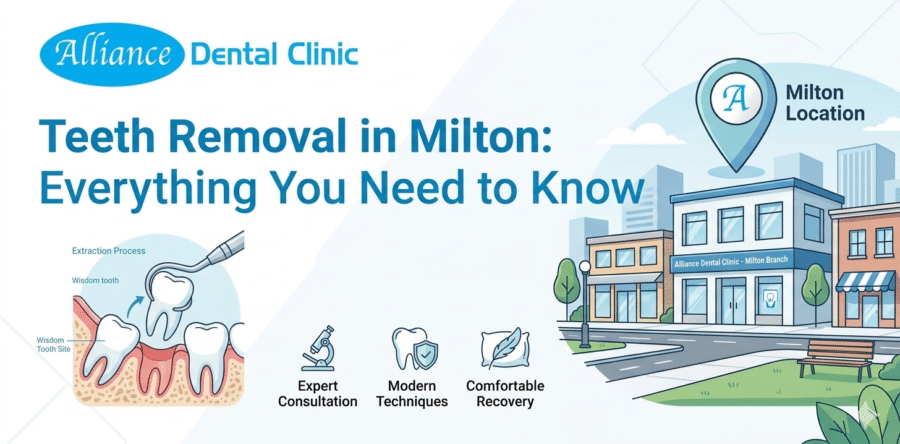
Tooth pain, swelling, or infection can make everyday activities like eating and speaking uncomfortable. At Alliance Dental Clinic in Milton, Ontario, we understand how overwhelming dental problems can feel. While our team always works to save your natural teeth first, there are situations where tooth removal is the safest and most effective way to protect your long-term oral health.
Modern dental techniques make tooth extraction safe, precise, and far more comfortable than most patients expect. According to the American Dental Association (ADA), with proper diagnosis, gentle treatment, and good aftercare, most patients recover quickly and return to normal activities within a few days.
What Is a Tooth Extraction?
A tooth extraction is a dental procedure in which a dentist carefully removes a tooth from its socket in the jawbone. At Alliance Dental Clinic, we recommend extraction only when a tooth cannot be saved with treatments such as fillings, crowns, or root canal therapy.
There are two primary types of tooth extraction:
Simple Tooth Extraction
Performed when the tooth is fully visible above the gum line. Our dentist gently loosens the tooth using specialized instruments and removes it from the socket under local anesthesia.
Surgical Tooth Extraction
Required when the tooth is broken, impacted, or trapped beneath the gums. This is commonly used for wisdom tooth extraction, particularly when the tooth grows sideways or becomes stuck in the jawbone.
Common Reasons Our Milton Dentists Recommend Teeth Removal
Our team at Alliance Dental Clinic carefully evaluates every patient before recommending an extraction. Common reasons include:
1. Severe Tooth Decay
When decay destroys a large portion of the tooth structure, a filling or crown may no longer be sufficient to restore it.
2. Tooth Infection
If bacteria reach the inner pulp and spread to surrounding tissues or bone, and root canal treatment is not a viable option, extraction may be necessary to stop the infection from spreading. The Canadian Dental Association notes that early intervention is key to preventing the spread of dental infections.
3. Impacted Wisdom Teeth
Many patients visit us specifically because wisdom teeth are causing discomfort, swelling, or crowding. Impacted wisdom teeth often require surgical extraction to prevent infections and damage to nearby teeth.
4. Advanced Gum Disease
Severe periodontal disease can weaken the bone and tissues supporting the teeth. When a tooth becomes loose due to bone loss, removal may be required. Consistent preventive dental care helps detect gum disease early before it reaches this stage.
5. Broken or Fractured Teeth
A badly broken tooth caused by injury or biting on hard objects may need extraction if it cannot be restored with a dental crown or bridge. If you experience sudden dental trauma, our dental emergency team is here to help.
6. Orthodontic Treatment
In some cases, removing a tooth creates the space needed for proper alignment during braces or aligner treatment.
Wisdom Tooth Extraction: Why It Is Often Necessary
Wisdom tooth extraction is one of the most common procedures performed at Alliance Dental Clinic. Wisdom teeth typically appear between the ages of 17 and 25, and many patients simply do not have enough space in their jaw to accommodate these additional molars.
When wisdom teeth grow incorrectly, they can cause:
- Jaw pain and swelling
- Gum infections around the tooth
- Crowding and shifting of nearby teeth
- Difficulty fully opening the mouth
- Damage to neighbouring molars
If you are experiencing any of these symptoms, our Milton dental team recommends early evaluation to prevent further complications. Following extraction, many patients choose to replace missing teeth with dental implants for a permanent, natural-looking solution.
The Tooth Extraction Procedure at Alliance Dental Clinic
Understanding each step can help ease any anxiety before your appointment.
1. Dental Examination and X-Rays
Our dentist begins with a thorough examination and dental X-rays to assess the tooth roots, surrounding bone, and nearby nerves.
2. Local Anesthesia
Local anesthesia is administered to fully numb the treatment area. You will remain comfortable and pain-free throughout the procedure.
3. Loosening the Tooth
For a simple extraction, we gently loosen the tooth using specialized instruments designed to minimize trauma to the surrounding gum and bone tissue.
4. Removing the Tooth
Once fully loosened, the tooth is carefully removed from the socket.
5. Cleaning the Site
The extraction site is cleaned and gauze is placed over the area to help control bleeding and allow a protective blood clot to form.
Most extractions at our Milton clinic are completed quickly, and patients are able to return home the same day.
Recovery After Teeth Removal
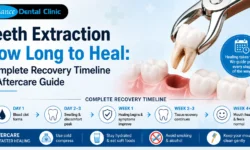
Healing after a tooth extraction typically takes a few days. The National Institute of Dental and Craniofacial Research (NIDCR) recommends following your dentist’s aftercare instructions closely for a smooth, complication-free recovery.
Immediate Aftercare Tips
- Bite gently on gauze to control bleeding for the first hour
- Avoid rinsing the mouth for the first 24 hours
- Apply an ice pack to reduce swelling during the first day
- Rest and avoid strenuous physical activity for 24 to 48 hours
- Take any prescribed or recommended medications as directed
What Can You Eat After Wisdom Tooth Removal?
Soft foods are strongly recommended during the first few days to avoid disturbing the healing extraction site. Safe options include:
- Yogurt and smoothies
- Mashed potatoes and soft soups
- Scrambled eggs
- Oatmeal and soft cereals
- Applesauce and soft fruits
Avoid crunchy, spicy, sticky, or very hot foods until the site has healed.
How to Prevent Dry Socket After Wisdom Tooth Removal
Dry socket occurs when the protective blood clot at the extraction site becomes dislodged. The following steps can significantly reduce this risk:
- Avoid smoking for at least 72 hours after extraction
- Do not drink through straws for the first few days
- Avoid aggressive rinsing or spitting
- Follow all post-treatment instructions provided by our team
- Maintain gentle oral hygiene around the extraction area
When Should You See a Dentist in Milton?
If you experience any of the following, contact Alliance Dental Clinic promptly for an evaluation:
- Persistent or severe tooth pain
- Swelling around a tooth or in the jaw
- Signs of infection such as pus, bad taste, or fever
- A wisdom tooth that is partially erupted or causing pressure
- A broken or cracked tooth that is causing discomfort
- Loose teeth due to gum disease
Early diagnosis allows our team to treat dental problems before they become more serious — and in many cases, saves the tooth entirely. For families looking for comprehensive care under one roof, our family dentistry in Milton practice covers everything from routine checkups to complex restorative work. Our full range of dental services in Milton ensures every member of your family receives the right care at every stage of life.
Contact Us
If you are experiencing tooth pain, swelling, infection, or require wisdom tooth removal in Milton, Ontario, our experienced dental team is here to help. We offer gentle, affordable, and personalized care for every patient. Book an appointment today and receive a personalized consultation and treatment plan tailored to your dental needs.
Alliance Dental Clinic
470 Bronte St S., Suite 109, Milton, Ontario L9T 2J4
Phone: 905-864-4040
Email: alliancedentalclinic@gmail.com
Website: dentistinmilton.ca
Frequently Asked Questions
Is wisdom tooth removal painful?
No. At Alliance Dental Clinic, we use local anesthesia to fully numb the area before the procedure. You may experience some mild soreness in the days following extraction, but this is manageable with over-the-counter pain relief and typically improves within a few days.
How long does recovery take after a tooth extraction?
Most patients recover within 3 to 7 days. Simple extractions tend to heal faster, while surgical extractions such as wisdom tooth removal may take a few days longer. Following your aftercare instructions greatly supports faster healing.
What can you eat after removing wisdom teeth?
During the first few days, stick to soft foods such as yogurt, mashed potatoes, smoothies, scrambled eggs, oatmeal, and soft soups. Avoid anything crunchy, spicy, sticky, or extremely hot until the extraction site has healed.
How do I prevent dry socket after wisdom tooth removal?
Avoid smoking, drinking through straws, and aggressive rinsing for the first few days after your extraction. Following all aftercare instructions provided by our team at Alliance Dental Clinic is the best way to protect the healing blood clot and prevent dry socket.
Does wisdom tooth removal cost more than a regular extraction?
Yes, wisdom tooth removal is generally slightly higher in cost due to the complexity of the procedure. At Alliance Dental Clinic, we always provide an upfront estimate before treatment and offer insurance assistance and flexible payment options.
What is plaque removal, and can it be done at home?
Plaque is a soft, sticky film of bacteria that forms on the teeth. It can be reduced significantly at home through brushing twice daily with fluoride toothpaste, flossing every day, and using an antibacterial mouthwash. Professional plaque removal during a routine dental cleaning at Alliance Dental Clinic ensures thorough removal before it hardens into tartar. Learn more about preventive dental care and how regular visits protect your smile.
How do I remove calculus (tartar) from my teeth at home?
Unfortunately, once plaque hardens into calculus (tartar), it cannot be safely removed at home. Attempting to scrape it off yourself can damage your enamel and gums. Only a dental professional using specialized instruments can safely remove calculus. We recommend visiting Alliance Dental Clinic in Milton for regular cleanings to keep tartar buildup under control.
How do I remove white spots from my teeth?
White spots on teeth can result from enamel demineralization, fluorosis, or early tooth decay. Treatment depends on the cause and may include remineralization therapy, enamel microabrasion, resin infiltration, or professional whitening. Our dentists at Alliance Dental Clinic can assess the cause and recommend the most appropriate treatment for you.
What is the best stain remover for teeth?
Professional stain removal at the dental clinic is the safest and most effective option. Depending on the cause of discoloration, treatment may include dental polishing, air polishing, or professional whitening. Over-the-counter whitening toothpastes can help with minor surface stains, but for deeper or stubborn staining, we recommend visiting our team at Alliance Dental Clinic for a personalized treatment plan.
How do I remove a cavity from my teeth?
Cavities cannot be removed at home. Dentists treat tooth decay using dental fillings, crowns, or root canal therapy depending on the severity. If you suspect you have a cavity, book an appointment with Alliance Dental Clinic in Milton as early as possible to prevent further damage.
How do I remove a black spot from a tooth?
A black spot on a tooth may indicate staining, tartar buildup, or tooth decay. Our dentists will examine the tooth and recommend the appropriate treatment, which could include professional cleaning, a dental filling or crown, or further restorative care. If you are unsure, contact us promptly — our dental emergency line is available for urgent concerns.