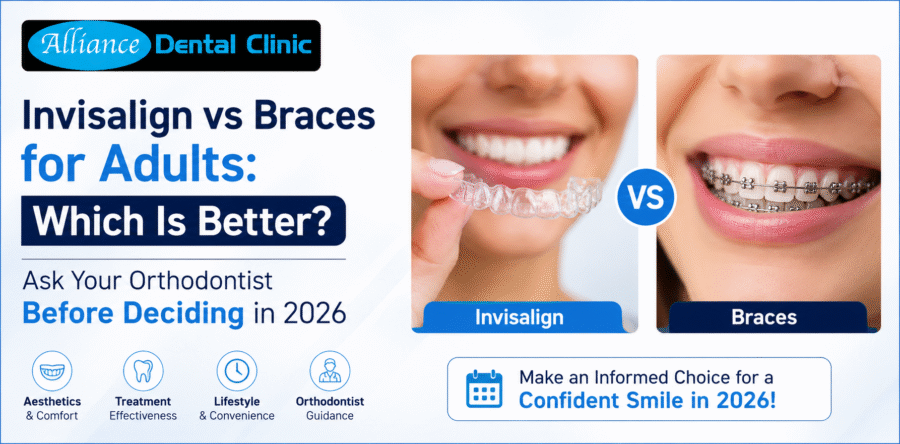
Should adults choose Invisalign or braces? Both options can effectively improve tooth alignment, correct bite issues, and enhance smile appearance. However, the best choice depends on more than aesthetics — and seeing a qualified orthodontist before deciding is essential. Factors such as treatment goals, oral health, lifestyle habits, and the complexity of your case all play an important role. At Alliance Dental Milton, our team evaluates your unique situation and recommends the most suitable treatment plan. While online research is helpful, professional guidance remains critical when making decisions about orthodontic treatment.
Why More Adults Are Choosing Orthodontic Treatment
Orthodontic treatment is no longer viewed as something reserved for teenagers. Many adults are now seeking teeth straightening solutions because they want to improve both the appearance and function of their smile. Common reasons adults visit an orthodontist include crowded teeth, gaps between teeth, overbite correction, underbite correction, crossbite treatment, teeth shifting after previous treatment, and difficulty cleaning misaligned teeth. According to the Canadian Association of Orthodontists (CAO), more than one in four Canadians who receive orthodontic treatment are adults over the age of 21. Proper alignment can make daily oral hygiene easier and may help reduce uneven wear on teeth over time. A healthier bite can also improve overall comfort and function.
What Is Invisalign?
Invisalign is a clear aligner system designed to gradually move teeth into their desired position. Instead of brackets and wires, Invisalign uses a series of custom-made transparent trays. Patients wear the aligners throughout the day and switch to new aligners as treatment progresses. One reason Invisalign remains popular among adults is its discreet appearance. At Alliance Dental, our Invisalign clear aligners are custom-fitted for comfort and precision, helping you achieve a straighter smile without disrupting your daily life.
Benefits of Invisalign:
- Nearly invisible during daily activities
- Removable for eating and drinking
- Easier brushing and flossing
- No dietary restrictions related to brackets
- Smooth aligners improve comfort
- Suitable for many mild and moderate cases
Potential Drawbacks of Invisalign:
- Requires consistent wear (20–22 hours per day)
- Must be removed before meals
- Can be misplaced
- Results depend heavily on patient compliance
- May not be ideal for every complex case
What Are Traditional Braces?
Braces treatment uses brackets and wires attached to the teeth to guide them into proper alignment. Today’s braces are smaller, more comfortable, and more advanced than those used decades ago. Our orthodontic treatment team often recommends braces for patients who need precise tooth movement or significant bite correction. Despite newer technologies, braces remain one of the most effective tools in modern orthodontics.
Benefits of Braces Treatment:
- Effective for simple and complex cases
- Excellent control over tooth movement
- Works continuously without removal
- Often preferred for severe crowding
- Can address challenging bite issues
Potential Drawbacks of Braces:
- More visible than clear aligners
- Food restrictions may apply
- Oral hygiene requires additional care
- Temporary irritation can occur after adjustments
Invisalign vs Braces: Side-by-Side Comparison
| Feature | Invisalign | Braces |
| Appearance | Nearly Invisible | Visible |
| Removable | Yes | No |
| Eating Restrictions | Minimal | Some Restrictions |
| Oral Hygiene | Easier | More Time Required |
| Compliance Needed | High | Low |
| Comfort | Generally Comfortable | May Cause Temporary Irritation |
| Complex Cases | Suitable for Many Cases | Excellent for Complex Cases |
| Bite Correction | Moderate to Advanced | Mild to Severe |
Which Option Do Orthodontists Usually Recommend?
There is no universal answer. A qualified orthodontist evaluates several factors before recommending treatment. The Canadian Dental Association (CDA) notes that orthodontic treatment options — including braces and clear aligners — should always be chosen based on a thorough clinical assessment of the patient’s individual needs.
Severity of Crowding
Mild crowding can often be corrected with Invisalign. More significant crowding may require braces for optimal control and tooth movement accuracy.
Bite Problems
Patients with severe overbites, underbites, or crossbites may benefit from braces due to the level of precision required. Our dental services team at Alliance Dental assesses bite problems thoroughly before any treatment recommendation is made.
Lifestyle Considerations
Adults who can consistently wear aligners may be good candidates for Invisalign. Individuals who prefer a treatment that works around the clock without needing removal may prefer braces.
Oral Health
Healthy gums and teeth are important before beginning any orthodontic treatment. Existing dental concerns — such as gum disease or cavities — may need to be addressed first through preventive dental care before orthodontic treatment begins.
Cases Where Invisalign May Be the Better Choice
Invisalign may be ideal for adults who prefer a discreet treatment option, frequently attend meetings or social events, have mild to moderate alignment concerns, can commit to wearing aligners as directed, or want flexibility during meals. For the right patient, Invisalign can fit seamlessly into daily life. Our family dentistry team in Milton can help assess whether clear aligners are right for you.
Cases Where Braces May Be the Better Choice
Braces treatment may be recommended when patients have severe crowding, significant bite discrepancies, complex tooth rotations, multiple orthodontic concerns, or difficulty remembering aligner wear schedules. In these situations, braces can provide greater control and predictability. Patients needing braces as part of broader dental restoration can also explore options like dental crowns and bridges in conjunction with their orthodontic plan.
Common Mistakes Adults Make When Choosing Orthodontic Treatment
Choosing Based Only on Appearance
Many adults focus solely on how treatment looks. While aesthetics matter, treatment effectiveness should always come first. A cosmetic result like professional teeth whitening can further enhance your smile after orthodontic treatment is complete — but the foundation must be proper alignment.
Ignoring Compliance Requirements
Invisalign works best when aligners are worn consistently. Skipping wear time can delay progress and affect results. Discuss compliance expectations openly with your Alliance Dental team before starting treatment.
Delaying Consultation
Online research can provide useful information, but it cannot replace a professional assessment. If you are already dealing with a dental emergency or acute pain that is affecting your bite, address it first — our emergency dental care team is available for urgent situations before you begin any orthodontic journey.
Overlooking Retainers
Retainers play a critical role after treatment. Without proper retention, teeth may gradually shift back toward their original position. Think of retainers as the long-term maintenance plan for your new smile — an important step that should never be skipped.
What Happens After Teeth Straightening?
Whether you choose Invisalign or braces, treatment doesn’t end when your teeth become straight. Most patients will need retainers to help maintain their results. Retention is a normal part of orthodontic care and helps preserve the improvements achieved during treatment. Straight teeth are also much easier to keep clean — supporting long-term children’s dentistry goals for families who want every member of their household to maintain optimal oral health.
Invisalign vs Braces: What Matters Most in 2026?
The biggest trend in orthodontics isn’t Invisalign or braces — it’s personalization. Today’s orthodontists use digital technology, detailed diagnostics, and customized treatment planning to create solutions tailored to each patient. The Canadian Association of Orthodontists (CAO) emphasizes that certified orthodontic specialists are best positioned to evaluate your unique needs and develop a treatment plan that delivers lasting results. Rather than asking which treatment is universally better, a more useful question is: which treatment is best for my specific smile? That answer can only come from a comprehensive orthodontic evaluation with a qualified professional.
Explore More Dental Services at Alliance Dental Milton
Whether you need orthodontic treatment or a complete family dental plan, Alliance Dental Clinic in Milton offers comprehensive dental services for every age. In addition to orthodontics, our full range of services includes:
- Preventive dental care — regular cleanings, fluoride treatments, and oral hygiene guidance
- Children’s dentistry — gentle, kid-friendly care for toddlers, preschoolers, and school-age children
- Family dentistry — comprehensive care for every member of your household
- Root canal treatment — saving infected teeth before they require extraction
- Dental crowns and bridges — restoring damaged or missing teeth
- Dental implants — permanent tooth replacement
- Professional teeth whitening — brightening your smile
- Invisalign clear aligners — discreet teeth straightening
- Emergency dental care — same-day appointments for urgent issues
Conclusion: Choosing Between Invisalign and Braces as an Adult
The Invisalign versus braces debate continues in 2026 because both treatments offer valuable benefits. For some adults, Invisalign provides the flexibility and discreet appearance they want. For others, braces treatment offers the precision needed to address complex orthodontic concerns. The most important factor is not choosing the newest treatment or the most popular option — it’s choosing a qualified orthodontist who can evaluate your needs and develop a personalized treatment plan.
Before making a decision, schedule a professional consultation, discuss your goals, and explore all available options. The Canadian Dental Association (CDA) recommends working with a licensed dental specialist who can provide a full clinical assessment before any orthodontic treatment begins. A healthier, straighter smile starts with expert guidance and a treatment plan designed specifically for you. In Milton, Ontario, Alliance Dental offers personalized orthodontic consultations — book your appointment today and take the first step toward the smile you deserve.
FAQ: Invisalign vs Braces for Adults – Common Questions Answered
Q: Is Invisalign better than braces for adults?
A: Not necessarily. Invisalign works well for many adults, especially those with mild to moderate alignment concerns. However, braces may be more effective for complex tooth movement and significant bite correction. A consultation with an Alliance Dental professional will help determine which option suits you best.
Q: Can adults get orthodontic treatment at any age?
A: Yes. Healthy teeth and gums are generally more important than age. Many adults successfully complete orthodontic treatment later in life. At Alliance Dental Milton, we welcome adult patients of all ages for orthodontic assessments.
Q: Which treatment is easier to maintain?
A: Invisalign typically makes brushing and flossing easier because the aligners are removable. Braces require additional care around brackets and wires, but our preventive dental care team will guide you through proper hygiene techniques for whichever treatment you choose.
Q: Do braces work faster than Invisalign?
A: Treatment length depends on the complexity of the case, patient compliance, and treatment goals. Both options can deliver excellent results when properly managed. Most orthodontic treatments take between 12 to 24 months to achieve desired results.
Q: Will I need a retainer after treatment?
A: Yes. Most patients require retainers after orthodontic treatment to help maintain their new tooth positions and protect long-term results. Our team will provide full instructions and follow-up care after your treatment concludes.
Q: What bite problems can an orthodontist fix?
A: Both Invisalign and braces can address a range of bite issues including overbite, underbite, crossbite, and crowded or gapped teeth. The right approach depends on the severity of the issue, which is why an in-person evaluation at our Milton dental clinic is the essential first step.

