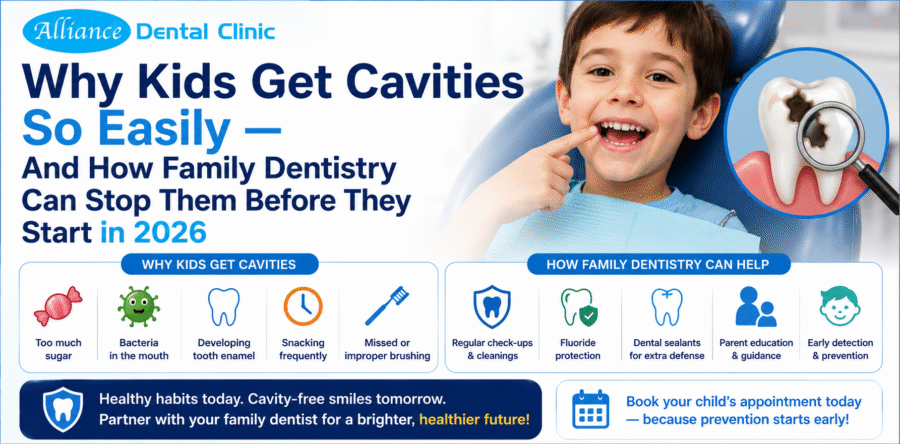
Why Kids Get Cavities So Easily — And How Family Dentistry Can Stop Them Before They Start in 2026
Why This Guide Matters
Cavities remain one of the most common childhood health problems, but they’re also among the most preventable. A proactive family dentistry approach combines routine checkups, preventive treatments, healthy habits, and parent education to reduce the risk of tooth decay before it starts. Early prevention protects baby teeth, supports proper development, and helps children build lifelong oral health habits.
Why Kids Get Cavities So Easily — And How Family Dentistry Can Stop Them Before They Start
Many parents are surprised when their child develops a cavity despite brushing every day. While sugary snacks often get the blame, tooth decay is usually caused by a combination of factors, including oral bacteria, frequent snacking, developing enamel, inconsistent brushing, and missed preventive dental visits.
Children’s teeth are more vulnerable than adult teeth, which means small problems can progress quickly if left untreated. Fortunately, a preventive approach through family dentistry helps identify risk factors early and keeps children’s smiles healthy as they grow.
Whether your child has baby teeth, newly erupted permanent teeth, or orthodontic appliances, regular family dental care plays an important role in preventing cavities and supporting long-term oral health.
Key Takeaways
- Children have thinner enamel, making teeth more susceptible to cavities.
- Tooth decay develops from bacteria, sugar, and repeated acid attacks on enamel.
- Most childhood cavities are preventable through consistent oral hygiene and preventive dental care.
- Routine dental checkups allow dentists to detect problems before they become painful.
- Fluoride treatments, dental sealants, and healthy nutrition significantly reduce cavity risk.
- Parents play the biggest role in establishing lifelong oral hygiene habits.
- A trusted family dental clinic provides preventive care for every stage of childhood.
Why Are Children More Prone to Cavities Than Adults?
Children experience unique oral health challenges because their teeth and oral habits are still developing.
Unlike permanent teeth, baby teeth contain thinner enamel and dentin. As a result, bacteria can penetrate deeper into the tooth much faster once decay begins.
In addition, children often:
- Snack more frequently
- Consume sugary beverages
- Miss hard-to-reach teeth while brushing
- Forget to floss
- Have deep grooves in their molars that trap food
These factors create the ideal environment for cavity-causing bacteria to thrive. This is one of the reasons specialized children’s dentistry places so much emphasis on prevention rather than waiting to treat problems after they appear.
According to guidance from organizations such as the Canadian Dental Association (CDA), the American Dental Association (ADA), and Health Canada, early preventive dental care remains one of the most effective ways to reduce childhood tooth decay.
What Causes Cavities in Children?
Cavities do not develop overnight. They result from an ongoing process known as dental caries.
Here’s how it happens:
| Stage | What Happens |
| Food and drinks remain on teeth | Sugars and starches feed oral bacteria. |
| Plaque biofilm forms | Bacteria multiply on the tooth surface. |
| Acid production begins | Bacteria convert sugars into acid. |
| Enamel loses minerals | The tooth begins to weaken (demineralization). |
| Early decay appears | White spots may develop on the enamel. |
| Cavity forms | Permanent damage occurs if minerals aren’t restored. |
The earlier this process is interrupted, the easier it is to preserve healthy tooth structure.
Why Kids Get Cavities So Easily
1. Baby Teeth Have Softer Enamel
Primary teeth naturally have thinner protective enamel.
Because of this, acid can dissolve minerals more quickly, allowing cavities to spread faster than they would in adult teeth.
This is one reason dentists encourage regular preventive examinations even before permanent teeth erupt.
2. Frequent Snacking Keeps Acid Active
Many children’s eating habits unintentionally increase cavity risk.
Examples include:
- Crackers
- Fruit gummies
- Cookies
- Sweetened yogurt
- Juice boxes
- Sports drinks
- Sticky candies
Every time sugar enters the mouth, plaque bacteria produce acids for approximately 20–30 minutes.
Frequent snacking means teeth spend much of the day under repeated acid attacks.
3. Children Are Still Learning Proper Brushing
Even when children brush twice daily, they may miss important areas.
Common brushing mistakes include:
- Missing back molars
- Brushing too quickly
- Not brushing along the gumline
- Forgetting the inside surfaces
- Skipping flossing
Parents should supervise brushing until children demonstrate consistent, effective brushing skills.
4. Deep Grooves Trap Food
Permanent molars contain natural pits and fissures that easily collect food particles.
Even a good toothbrush cannot always reach these narrow grooves.
This is why many family dental services recommend dental sealants shortly after permanent molars erupt.
Sealants create a protective barrier that helps prevent bacteria from settling into these difficult-to-clean areas.
5. Dry Mouth Can Increase Cavity Risk
Saliva plays an essential role in protecting teeth.
It helps:
- Neutralize acids
- Wash away food particles
- Deliver minerals that strengthen enamel
Children who breathe through their mouths, take certain medications, or don’t drink enough water may experience reduced saliva, increasing their risk of cavities.
6. Poor Oral Hygiene Allows Plaque to Build Up
Plaque is a sticky layer of bacteria that constantly forms on teeth.
If it isn’t removed through brushing and flossing, bacteria continue producing acids that weaken enamel.
Professional cleanings performed during routine family dentistry visits help remove plaque and tartar from areas that are difficult to clean at home.
Early Warning Signs Parents Should Never Ignore
One of the biggest misconceptions is that cavities always hurt.
In reality, early tooth decay is often painless.
Watch for these signs:
- White chalky spots on teeth
- Brown or black discoloration
- Food getting trapped between teeth
- Tooth sensitivity
- Complaints while chewing
- Persistent bad breath
- Visible holes in teeth
- Swollen gums around a tooth
Scheduling an evaluation early often allows for more conservative treatment and better outcomes. HealthLink BC also recommends regularly lifting your child’s lip to check along the gumline for these same early warning signs.
Why Baby Teeth Matter More Than Many Parents Think
Some parents assume cavities in baby teeth aren’t serious because those teeth eventually fall out.
However, healthy baby teeth are essential for:
- Proper speech development
- Comfortable chewing
- Good nutrition
- Holding space for permanent teeth
- Jaw growth
- Facial development
- Building confidence through healthy smiles
Untreated decay in primary teeth can also spread to neighboring teeth and affect the development of permanent teeth underneath. In more advanced cases, deep decay left too long can even require treatments such as root canal treatment to save the tooth, which is why early intervention matters so much.
How Family Dentistry Prevents Cavities Before They Start
Preventive care is the foundation of modern family dentistry.
Rather than waiting until a child experiences pain, dentists focus on identifying risks early through preventive dental care and stopping decay before it progresses.
Regular Dental Examinations
Routine dental visits allow your dentist to monitor changes that parents may not notice at home.
During a comprehensive examination, your dentist checks for:
- Early enamel demineralization
- Tiny cavities
- Bite development
- Gum health
- Plaque accumulation
- Tooth eruption patterns
- Oral hygiene habits
Early diagnosis often means simpler, less invasive treatment.
Professional Dental Cleanings
Even children with good brushing habits accumulate plaque in hard-to-reach areas.
Professional cleanings help remove:
- Plaque biofilm
- Hardened tartar
- Surface stains
- Harmful bacteria
Regular cleanings are an important part of family dental care because they reduce the conditions that allow cavities and gum disease to develop.
Fluoride Strengthens Developing Teeth
Fluoride supports a natural process called remineralization.
It helps restore minerals that acids remove from enamel, making teeth more resistant to future decay.
Professional fluoride treatments are particularly beneficial for children with a higher risk of cavities and are commonly recommended as part of preventive family dental services.
Dental Sealants: A Simple Way to Protect Molars
One of the most effective preventive treatments offered in family dentistry is the application of dental sealants.
Sealants are thin, protective coatings placed on the chewing surfaces of permanent molars, where deep grooves can trap food and bacteria. These areas are difficult for children to clean thoroughly, even with proper brushing.
Benefits of Dental Sealants
- Protect deep pits and fissures
- Reduce the risk of cavities in molars
- Provide long-lasting protection
- Completely painless to apply
- Help preserve healthy tooth structure
Many children receive sealants soon after their first and second permanent molars erupt. Your dentist will determine whether sealants are appropriate as part of your family’s broader dental services, based on your child’s individual cavity risk.
Nutrition Matters More Than Most Parents Realize
Parents often focus on how much sugar their child eats, but how often they eat sugary foods is just as important.
Every sugary snack or drink starts another acid attack on the teeth. Frequent snacking means teeth have less time to recover naturally.
Tooth-Friendly Foods
Choosing healthier snacks supports stronger teeth and better overall oral health.
| Better Choices | Foods to Limit |
| Water | Soft drinks |
| Cheese | Sticky candy |
| Plain yogurt | Fruit gummies |
| Apples | Sweet pastries |
| Pears | Sugary breakfast cereals |
| Carrots | Juice boxes |
| Cucumbers | Sports drinks |
| Leafy vegetables | Sweetened milk before bed |
Calcium-rich foods, phosphorus, and vitamin D also contribute to stronger developing teeth.
Encouraging children to drink water after meals helps rinse away food particles and supports saliva production.
Does Fruit Juice Cause Cavities?
This is one of the most common questions parents ask.
Although 100% fruit juice contains vitamins, it also contains natural sugars that oral bacteria can use to produce acid.
Instead of allowing children to sip juice throughout the day:
- Offer juice only during meals.
- Encourage water between meals.
- Avoid putting children to bed with juice or milk.
- Limit sugary beverages whenever possible.
Small changes like these can significantly reduce cavity risk over time.
A Daily Family Dental Care Routine That Works
Healthy habits are easier to maintain when the entire family follows the same routine.
Morning
- Brush for two minutes using fluoride toothpaste.
- Eat a balanced breakfast.
- Drink water before leaving home.
After School
- Choose nutritious snacks.
- Limit sugary drinks.
- Rinse with water after eating.
Evening
- Brush thoroughly before bedtime.
- Floss once daily.
- Avoid snacks after brushing.
Replace toothbrushes every three months or sooner if the bristles become worn.
Consistency is one of the most effective tools for preventing cavities.
Parents Play the Biggest Role in Preventing Cavities
Children learn by watching the adults around them.
When parents prioritize oral health, children are more likely to develop healthy habits that last into adulthood.
You can encourage positive habits by:
- Brushing together.
- Making flossing part of the bedtime routine.
- Choosing healthier snacks.
- Keeping regular dental appointments.
- Celebrating good oral hygiene instead of making dental visits feel stressful.
A preventive approach to family dentistry creates healthy routines that benefit every member of the household.
How Often Should Children Visit a Family Dental Clinic?
Most children benefit from dental examinations and professional cleanings every six months.
However, your dentist may recommend more frequent visits if your child has:
- A history of multiple cavities
- Orthodontic appliances
- Dry mouth
- Poor oral hygiene
- High sugar consumption
- Certain medical conditions that increase cavity risk
Routine visits allow your family dental clinic to detect small problems before they become larger ones. You can learn more about Alliance Dental and our approach to ongoing family care at any stage of childhood.
Common Myths About Childhood Cavities
| Myth | Fact |
| Baby teeth don’t need treatment. | Healthy baby teeth are essential for eating, speaking, jaw development, and guiding permanent teeth into the correct position. |
| If my child brushes twice a day, cavities won’t happen. | Brushing is only one part of prevention. Diet, flossing, fluoride exposure, genetics, and regular dental visits all influence cavity risk. |
| Sugar is the only cause of cavities. | Cavities result from bacteria, plaque buildup, frequent acid exposure, poor oral hygiene, and dietary habits working together. |
| Cavities always hurt. | Early tooth decay often causes no pain. Many cavities are discovered during routine dental examinations. |
| Baby teeth fall out anyway, so cavities don’t matter. | Untreated decay can lead to infection, discomfort, difficulty eating, and problems with permanent teeth. |
Family Dentistry vs. Waiting Until There’s a Problem
Choosing proactive family dentistry over reactive treatment changes the entire trajectory of your child’s oral health.
| Preventive Family Dentistry | Waiting Until Pain Starts |
| Early cavity detection | Larger cavities develop unnoticed |
| Routine cleanings remove plaque | Plaque and tartar continue to build |
| Fluoride strengthens enamel | Weak enamel becomes more vulnerable |
| Sealants protect molars | Deep grooves remain exposed to bacteria |
| Healthy habits are reinforced | Poor habits become harder to change |
| Less invasive treatment when needed | More complex dental treatment may be required |
Prevention is almost always easier than treating advanced tooth decay.
Tips for Parents to Reduce Cavity Risk
Start with these simple habits:
- Brush your child’s teeth twice every day.
- Use fluoride toothpaste appropriate for your child’s age.
- Begin flossing when teeth touch.
- Limit sugary snacks between meals.
- Encourage water instead of sugary drinks.
- Schedule routine preventive dental visits.
- Ask your dentist whether dental sealants are appropriate.
- Replace toothbrushes regularly.
- Avoid sharing utensils that may transfer cavity-causing bacteria.
- Make oral health part of your family’s daily routine.
Internal Reading Suggestions
To continue learning about preventive oral health, consider reading more about:
- Professional teeth cleaning
- Preventive dental care
- Children’s dentistry
- Emergency dental care for children
- Fluoride treatments
- Dental sealants
- Healthy gums
- Tooth sensitivity
- Family dental checkups
These related topics help families better understand how daily habits and preventive care work together to maintain healthy smiles.
Final Thoughts
Protecting your child’s smile starts long before a cavity develops. Healthy eating habits, proper brushing and flossing, regular dental visits, and preventive treatments all work together to reduce the risk of tooth decay.
A proactive approach to family dentistry allows dental professionals to identify early warning signs, strengthen developing teeth, and provide personalized guidance that supports lifelong oral health. From routine examinations and professional cleanings to fluoride treatments and dental sealants, preventive care helps children keep their natural teeth healthier for years to come.
Parents also play an essential role. By creating positive oral hygiene habits at home and scheduling regular visits to a family dental clinic, families can significantly reduce the likelihood of cavities and support healthier smiles through every stage of childhood.
Investing in preventive family dental care today can help children avoid unnecessary discomfort, maintain confidence in their smiles, and enjoy better oral health well into adulthood. Ready to get started? Schedule an appointment for your child’s next checkup.
Frequently Asked Questions (FAQs)
1. Why do children get cavities more easily than adults?
Children have thinner enamel, developing brushing skills, frequent snacking habits, and deep grooves in their molars where bacteria can collect. These factors make their teeth more vulnerable to tooth decay.
2. At what age should my child first visit a family dentist?
Most dental professionals recommend scheduling a child’s first dental visit by their first birthday or within six months after the first tooth appears. Early visits help establish healthy habits and identify potential concerns before they become serious.
3. How does family dentistry help prevent cavities?
Family dentistry focuses on prevention through regular examinations, professional cleanings, fluoride treatments, dental sealants, oral hygiene education, and personalized guidance for every stage of childhood.
4. Are dental sealants really effective for children?
Yes. Dental sealants provide a protective barrier over the chewing surfaces of molars, reducing the likelihood of cavities developing in the deep grooves that are difficult to clean with a toothbrush.
5. What foods help keep children’s teeth healthy?
Water, cheese, plain yogurt, fresh fruits, vegetables, and calcium-rich foods help support strong teeth. Limiting sugary snacks and drinks between meals also lowers the risk of tooth decay. Have more questions? Visit our FAQs page for additional answers.

