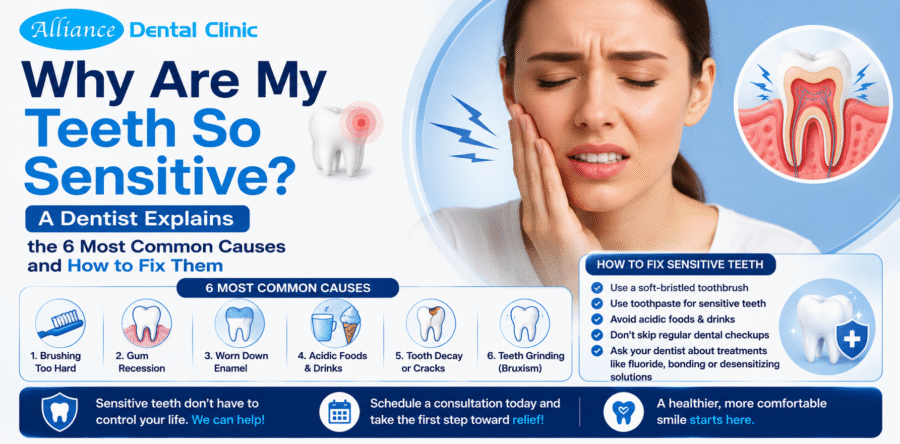
If you’ve ever felt a sharp, sudden pain while drinking iced water, enjoying hot coffee, or eating something sweet, you’re not alone. Tooth sensitivity affects millions of people and is one of the most common reasons patients schedule an appointment with a dentist. Although occasional sensitivity may seem harmless, persistent discomfort often indicates an underlying dental issue that should not be ignored. Worn enamel, exposed tooth roots, cavities, teeth grinding, or even a small crack can all trigger sensitivity.
The encouraging news is that most causes of sensitive teeth can be successfully treated when diagnosed early. At Alliance Dental Clinic, our goal is to help patients understand the cause of their symptoms rather than simply treating the pain. Through preventive dental care, comprehensive examinations, and personalized treatment plans, our team helps patients protect their smiles and avoid future complications.
Whether your sensitivity started recently or has gradually worsened over time, understanding the cause is the first step toward lasting relief.
Quick Answer
Tooth sensitivity usually occurs when the protective enamel wears away or the gums recede, exposing the dentin beneath the surface. This allows heat, cold, sweet foods, or acidic drinks to reach the tooth’s nerve, causing discomfort. According to the Ontario Dental Association (ODA), telling your dentist about sensitivity matters because it can be an early sign of something more serious, such as gum disease. Our team can identify the underlying cause and recommend the most appropriate treatment before the problem becomes more serious.
What Is Tooth Sensitivity?
Tooth sensitivity, medically known as dentin hypersensitivity, is a condition in which one or more teeth react painfully to everyday triggers.
Common Triggers Include:
- Cold drinks
- Hot beverages
- Ice cream
- Sweet foods
- Acidic fruits
- Cold air
- Brushing
- Flossing
Inside every tooth lies a layer called dentin, which contains thousands of microscopic channels leading directly to the tooth’s nerve. Normally, enamel and healthy gums protect this layer. However, when enamel becomes thinner or the gums pull away from the tooth, these tiny pathways become exposed. As a result, temperature changes or certain foods stimulate the nerve, causing the familiar sharp pain associated with sensitive teeth.
While sensitivity itself is not a disease, it is often a symptom of another dental condition that requires professional attention.
Why Teeth Become Sensitive
Healthy teeth rely on several protective structures working together:
- Strong enamel
- Healthy gums
- Intact tooth roots
- Balanced oral bacteria
- Good daily oral hygiene
When one or more of these protective barriers is compromised, tooth sensitivity can develop. Some of the most common causes include:
- Enamel erosion
- Gum recession
- Tooth decay
- Cracked teeth
- Teeth grinding
- Recent dental procedures
Because different causes require different treatments, visiting a dentist is the most effective way to determine what’s causing your discomfort.
1. Enamel Erosion
Enamel is the strongest substance in the human body, but it can gradually wear away over time. Unlike other tissues, enamel cannot regenerate once it has been lost. As enamel becomes thinner, the underlying dentin becomes exposed, making teeth more vulnerable to sensitivity.
What Causes Enamel Erosion?
Several everyday habits can contribute to enamel wear, including:
- Drinking soft drinks regularly
- Frequent consumption of citrus fruits
- Sports and energy drinks
- Acid reflux
- Brushing too aggressively
- Using a hard-bristled toothbrush
- Teeth grinding
- Poor oral hygiene
Even healthy foods can contribute to enamel erosion if consumed frequently without proper oral hygiene afterward.
Signs of Enamel Erosion
- Increased sensitivity to hot and cold
- Teeth appearing more yellow
- Rounded tooth edges
- Small surface cracks
- Smooth or glossy tooth surfaces
- Mild discomfort when eating sweets
How a Dentist Can Help
A dentist can identify enamel erosion during a routine examination before it progresses further. Depending on the severity, treatment may include:
- Professional fluoride applications
- Prescription-strength desensitizing toothpaste
- Dental bonding
- Custom night guards
- Dietary guidance
- Preventive dental care recommendations
Early intervention helps preserve healthy tooth structure and minimizes future treatment needs.
2. Gum Recession
Your gums protect the roots of your teeth. When the gum tissue gradually pulls away, the root surface becomes exposed. Unlike the crown of the tooth, the root is not covered by enamel, making it naturally more sensitive to temperature changes. Many people don’t realize they have gum recession until sensitivity develops.
Common Causes
- Gum disease
- Brushing too hard
- Smoking or tobacco use
- Teeth grinding
- Misaligned teeth
- Genetics
- Poor oral hygiene habits
Symptoms
- Teeth looking longer than before
- Sensitivity near the gumline
- Bleeding during brushing
- Tender gums
- Small grooves near the roots
Treatment Options
A family dentist may recommend:
- Professional deep cleaning
- Treatment for gum disease
- Improved brushing techniques
- Soft-bristled toothbrushes
- Fluoride treatments
- Gum grafting in advanced cases
Addressing gum recession early helps protect both your teeth and the supporting bone.
3. Tooth Decay and Cavities
Cavities remain one of the leading causes of tooth sensitivity. When plaque bacteria produce acids, they gradually dissolve the enamel and create small openings in the tooth. As decay spreads toward the dentin, sensitivity often becomes more noticeable. Without treatment, bacteria can eventually reach the tooth’s pulp, leading to severe pain or infection.
Early Warning Signs
- Sensitivity to sweets
- Pain while chewing
- Cold sensitivity
- Visible holes in the tooth
- Brown, black, or white spots
- Persistent bad breath
Early cavities often cause very few symptoms, making regular dental examinations essential.
How a Dental Clinic Treats Cavities
During your visit, a dentist will assess the affected tooth and recommend the most appropriate treatment. Depending on the extent of decay, treatment may include:
- Tooth-colored fillings
- Dental bonding
- Inlays or onlays
- Dental crowns
- Root canal treatment when necessary
Routine visits to a dental clinic allow cavities to be detected before they become painful or require more extensive treatment.
How to Reduce Tooth Sensitivity at Home
Although professional diagnosis is important, healthy habits can help reduce everyday discomfort and support long-term oral health.
Daily Dental Care Tips
- Brush twice a day with a soft-bristled toothbrush.
- Use fluoride toothpaste designed for sensitive teeth.
- Floss every day to remove plaque between teeth.
- Drink water after acidic foods and beverages.
- Avoid chewing ice or other hard objects.
- Limit sugary snacks and acidic drinks.
- Wear a custom night guard if you grind your teeth.
- Visit your dentist regularly for preventive dental care and professional cleanings.
These simple habits can help reduce sensitivity while protecting your teeth from future damage. The Canadian Dental Association (CDA) also recommends replacing your toothbrush every three months and waiting 30 minutes after eating before brushing, to avoid further wearing down softened enamel.
Key Takeaways
- Tooth sensitivity is often caused by exposed dentin.
- Enamel erosion, gum recession, and cavities are among the most common causes.
- Early diagnosis by a dentist can prevent more serious dental problems.
- Consistent dental care and routine checkups play an essential role in preventing sensitivity.
- Most cases of tooth sensitivity can be successfully managed with timely treatment.
4. Cracked or Chipped Teeth
Even a small crack or chip can expose the inner layers of a tooth, allowing hot, cold, or sweet foods to reach the nerve. The result is often sharp pain when chewing or drinking. Cracks may be difficult to see, but they should never be ignored because they can worsen over time.
Common Causes
- Biting hard foods or ice
- Sports injuries or accidents
- Teeth grinding (bruxism)
- Large, aging fillings
- Sudden trauma to the mouth
Symptoms
- Sharp pain when biting
- Sensitivity that comes and goes
- Pain with hot or cold foods
- A rough or chipped edge
- Discomfort while chewing
How a Dentist Treats a Cracked Tooth
A dentist will examine the tooth using digital X-rays and a clinical examination to determine the extent of the damage. Treatment may include:
- Dental bonding for minor chips
- A dental crown to strengthen the tooth
- Root canal treatment if the pulp is affected
- Tooth extraction only when the tooth cannot be preserved
Prompt treatment can often save the natural tooth and prevent further complications.
5. Teeth Grinding (Bruxism)
Many people clench or grind their teeth while sleeping without realizing it. Over time, this repeated pressure wears down enamel, creates tiny fractures, and increases tooth sensitivity.
Signs You May Grind Your Teeth
- Morning jaw pain
- Frequent headaches
- Worn or flattened teeth
- Sensitive teeth
- Chipped teeth
- Clicking or tight jaw muscles
Stress, sleep disorders, and bite problems are among the most common contributing factors.
Treatment Options
After evaluating your bite, your family dentist may recommend:
- A custom night guard
- Bite adjustment when appropriate
- Restorative treatment for damaged teeth
- Stress-management strategies
- Regular monitoring during routine visits
Protecting your teeth from grinding helps preserve enamel and reduces future dental problems. Some patients also benefit from an orthodontic treatment plan when grinding is linked to a misaligned bite.
6. Recent Dental Treatment
Some sensitivity is normal after dental procedures because the tooth needs time to recover.
Temporary sensitivity may occur after:
- Professional dental cleaning
- Tooth-colored fillings
- Dental crowns
- Teeth whitening
- Orthodontic treatment
- Root canal treatment
In most cases, the discomfort improves within a few days or weeks. However, if the pain becomes severe, lasts longer than expected, or is accompanied by swelling, contact your dentist promptly for an evaluation.
How Does a Dentist Diagnose Tooth Sensitivity?
Because several conditions can cause sensitive teeth, identifying the exact reason is essential before beginning treatment.
At Alliance Dental Clinic, your examination may include:
- A review of your dental and medical history
- Discussion of your symptoms and triggers
- Clinical examination of the teeth and gums
- Digital dental X-rays, when needed
- Bite assessment
- Evaluation for enamel wear, cavities, cracks, or gum recession
This comprehensive approach helps ensure that treatment addresses the root cause — not just the symptoms.
Treatment Options for Sensitive Teeth
The right treatment depends on the underlying cause of your sensitivity. A dentist may recommend one or more of the following:
Fluoride Treatment
Professional fluoride strengthens enamel and helps reduce sensitivity.
Desensitizing Toothpaste
Specialized toothpaste can block pain signals traveling through exposed dentin.
Dental Bonding
Bonding materials cover exposed root surfaces and protect sensitive areas.
Gum Disease Treatment
If gum recession is caused by periodontal disease, treating the infection is essential for long-term oral health.
Dental Crowns
A crown can restore and protect a weakened or cracked tooth while reducing sensitivity.
Night Guards
Custom night guards protect teeth from damage caused by grinding during sleep.
Root Canal Treatment
If sensitivity is caused by damage or infection affecting the dental pulp, root canal treatment may be the most appropriate option to relieve pain while preserving the tooth.
Your treatment plan should always be based on a professional diagnosis rather than symptoms alone.
When Should You See a Dentist?
Occasional sensitivity may not always require immediate treatment. However, ongoing discomfort should never be ignored.
Schedule an appointment if you experience:
- Tooth sensitivity lasting more than a few days
- Pain while eating or drinking
- Sensitivity that continues to worsen
- Swollen or bleeding gums
- Pain when chewing
- A cracked or chipped tooth
- Persistent toothache
- Facial swelling or signs of infection
Early treatment is often simpler, more comfortable, and helps preserve your natural teeth.
Can Tooth Sensitivity Be Prevented?
In many cases, yes. Healthy habits can significantly lower your risk of developing tooth sensitivity.
Daily Dental Care Tips
- Brush twice daily using fluoride toothpaste.
- Choose a soft-bristled toothbrush.
- Floss every day.
- Limit acidic foods and sugary beverages.
- Drink water after acidic meals.
- Avoid chewing ice or hard objects.
- Wear a night guard if you grind your teeth.
- Schedule regular examinations and professional cleanings at your dental clinic.
Preventive dental care remains one of the best ways to protect your smile and avoid future dental problems, and it also supports your broader wellbeing — Health Canada notes that oral health is closely tied to your overall physical, social, and mental wellbeing.
Explore More Dental Services at Alliance Dental Milton
Whether your discomfort turns out to be a minor sensitivity issue or something that needs more involved care, Alliance Dental Clinic in Milton offers comprehensive dental services for the whole family, including children’s dentistry, dental implants, and emergency care. Ready to get to the bottom of your sensitive teeth? Schedule your appointment with our team today.
Frequently Asked Questions
1. Why are my teeth suddenly sensitive to cold drinks?
Sensitivity to cold drinks often occurs when enamel wears down, gums recede, or tooth decay exposes the dentin. A dentist can identify the exact cause and recommend the most appropriate treatment.
2. Can sensitive teeth go away on their own?
Temporary sensitivity may improve after certain dental procedures. However, sensitivity caused by cavities, gum disease, enamel erosion, or cracked teeth usually requires professional dental care.
3. Is tooth sensitivity a sign of a cavity?
It can be. Cavities commonly cause sensitivity to sweets, cold drinks, and hot foods. A dental examination is the best way to determine whether decay is present.
4. What toothpaste is best for sensitive teeth?
Desensitizing fluoride toothpaste is often recommended because it helps reduce pain by blocking nerve pathways. Your family dentist can recommend the most suitable product based on your needs.
5. When should I worry about tooth sensitivity?
You should visit a dentist if sensitivity lasts longer than a few days, becomes more severe, affects your daily activities, or is accompanied by swelling, persistent pain, or visible tooth damage.
Final Thoughts
Tooth sensitivity is your body’s way of signaling that something may need attention. While the discomfort may begin as an occasional twinge, persistent sensitivity often points to conditions such as enamel erosion, gum recession, tooth decay, teeth grinding, or a cracked tooth.
The good news is that most causes of sensitive teeth are treatable when diagnosed early. Delaying care, however, can allow minor problems to progress into more complex conditions that require more extensive treatment.
If you’re experiencing ongoing tooth sensitivity, don’t ignore the signs. A comprehensive examination by a dentist can identify the cause and help you receive the right treatment before the problem worsens.
At Alliance Dental Clinic, we provide personalized dental care for patients of all ages. Whether you need preventive care, restorative treatment, or guidance on managing tooth sensitivity, our team is here to help you maintain a healthy, comfortable smile. Schedule your appointment today and take the first step toward lasting relief.

