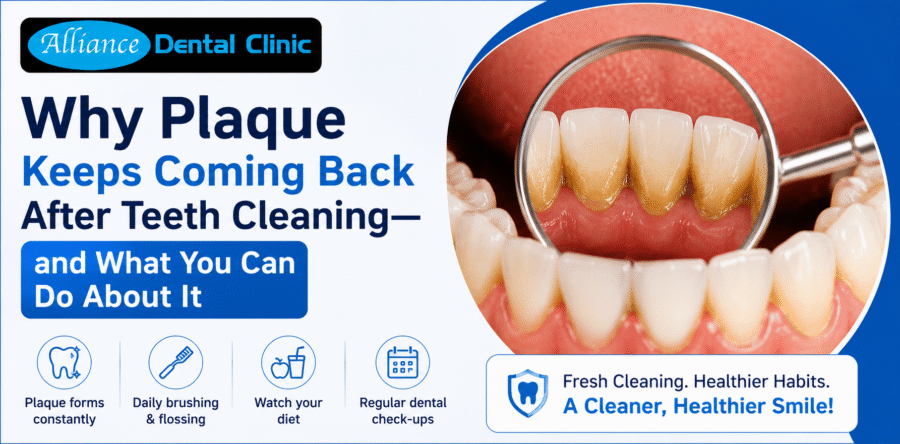
Why Plaque Keeps Coming Back After Teeth Cleaning—and What You Can Do About It. Have you ever looked in the mirror just a few days after a teeth cleaning appointment and wondered why your teeth no longer feel as smooth? You’re not alone. One of the most common questions dentists hear is, “If my teeth were professionally cleaned, why is plaque already coming back?” The answer is simple: plaque is a natural part of your mouth’s ecosystem. Every day, bacteria combine with saliva and tiny food particles to form a sticky film on your teeth. Even after a thorough professional cleaning, this process starts again within hours. The good news is that while you can’t stop plaque from forming altogether, you can slow it down and prevent it from turning into tartar or causing oral health problems. Understanding how plaque develops—and why it returns—can help you protect your smile between dental visits. At Alliance Dental Clinic in Ontario, Canada, preventive care is a priority because maintaining healthy teeth and gums starts with the right habits at home and regular family dentistry appointments.
Key Takeaways
- Plaque begins forming within hours after a teeth cleaning appointment.
- Regular brushing and flossing remove plaque before it hardens into tartar.
- Diet, oral hygiene habits, and saliva all influence how quickly plaque returns.
- Routine teeth cleaning helps remove hardened tartar that brushing cannot eliminate.
- Preventive care is the most effective way to reduce the risk of cavities and gum disease.
Plaque vs. Tartar: What’s the Difference?
| Plaque | Tartar |
| Soft, sticky film of bacteria | Hardened plaque that has absorbed minerals from saliva |
| Forms naturally every day | Develops when plaque is left on teeth for too long |
| Can usually be removed by brushing and flossing | Requires professional teeth cleaning for removal |
| Can lead to cavities and gum irritation | Increases the risk of gum disease and persistent plaque buildup |
Understanding the difference is important because plaque is manageable at home, while tartar requires professional care. According to the Canadian Dental Association (CDA), plaque that isn’t removed daily by brushing and flossing hardens into tartar, which can only be removed by a dentist or hygienist.
What Exactly Is Plaque?
Plaque is a thin layer of bacteria that constantly forms on your teeth, gums, and even your tongue. Your mouth naturally contains hundreds of species of bacteria. Most are harmless, but some feed on sugars and starches left behind after eating. As they digest these foods, they produce acids and create a sticky biofilm known as plaque.
If plaque isn’t removed regularly, it can:
- Irritate the gums
- Cause bad breath
- Increase the risk of tooth decay
- Lead to gingivitis
- Contribute to periodontal disease
This is why daily oral hygiene and routine dental cleaning work together to keep your mouth healthy.
Why Does Plaque Return So Quickly After Teeth Cleaning?
Many people believe a dental appointment should prevent plaque from coming back for months. In reality, a cleaning removes the plaque and tartar that are already present—it doesn’t stop new plaque from forming.
Your Mouth Never Stops Producing Bacteria
Your mouth is home to a balanced community of microorganisms known as the oral microbiome. Every time you eat or drink, bacteria interact with food particles and begin producing a new layer of plaque. This process is continuous and completely normal.
Saliva Creates the Perfect Surface
Within a few hours after teeth cleaning, saliva forms a thin protective coating on the enamel called the acquired pellicle. While this layer helps protect teeth, it also provides a surface where bacteria can attach and multiply. This explains why plaque begins returning even when your teeth felt perfectly polished after your appointment.
Diet Has a Bigger Impact Than Most People Realize
Certain foods encourage plaque to develop faster than others. Frequent consumption of:
- Sugary beverages
- Candy
- White bread
- Crackers
- Pastries
- Sticky snacks
provides bacteria with a steady food supply. Every time bacteria digest these carbohydrates, they produce acids that weaken enamel and contribute to plaque growth. On the other hand, foods such as crunchy vegetables, cheese, nuts, and plain yogurt are less likely to fuel harmful bacteria and can support better oral health.
Brushing Technique Matters More Than Frequency
Brushing twice a day is recommended, but technique is equally important. Many people unintentionally miss:
- The gumline
- Behind the back molars
- The inside surfaces of the lower front teeth
- Around dental restorations
- Hard-to-reach spaces near wisdom teeth
These overlooked areas become ideal places for plaque to rebuild after dental cleaning. Using gentle circular motions and brushing for at least two minutes helps improve plaque removal.
Flossing Removes What Your Toothbrush Can’t
Even an excellent toothbrush cannot clean every surface of your teeth. The narrow spaces between teeth trap food particles and bacteria, making them common areas for plaque accumulation. Daily flossing removes debris from these spaces before plaque has a chance to mature. Skipping flossing is one of the biggest reasons people experience recurring plaque despite brushing regularly.
How Long Does It Take for Plaque to Turn Into Tartar?
One of the most common questions people search online is whether plaque becomes tartar overnight. The answer is no—but it can happen surprisingly quickly. In many cases, plaque that remains undisturbed for 24 to 72 hours begins absorbing minerals from saliva. As it hardens, it transforms into tartar, also known as dental calculus.
Unlike plaque, tartar bonds firmly to the tooth surface and cannot be removed with a toothbrush or floss. This is where professional teeth cleaning becomes essential. Removing tartar helps reduce inflammation, improves gum health, and creates a smoother surface that makes it harder for new plaque to attach.
Factors That Cause Faster Plaque Buildup
Although everyone develops plaque, some people notice it returning much faster because of certain risk factors. These include:
- Dry mouth or reduced saliva flow
- Smoking or vaping
- Orthodontic braces or clear aligners
- Crowded or overlapping teeth
- Frequent snacking throughout the day
- Poor brushing technique
- High-sugar diets
- Certain medications
- Existing gum disease
- Diabetes or other systemic health conditions
Recognizing these factors allows you and your dental team to create a preventive care routine that better suits your individual needs. If braces or aligners are part of the picture, our orthodontic treatment team can also advise on cleaning around brackets and wires.
How to Slow Plaque Buildup Between Teeth Cleaning Appointments
Keeping plaque under control doesn’t require complicated routines. The key is consistency. Small daily habits can significantly reduce the amount of plaque that forms and help maintain the results of your teeth cleaning appointment for longer.
Brush the Right Way
Brushing twice a day is essential, but how you brush matters just as much as how often you brush. For effective plaque removal:
- Brush for at least two minutes.
- Use a soft-bristled toothbrush.
- Hold the brush at a 45-degree angle toward the gumline.
- Clean every surface of each tooth.
- Replace your toothbrush every three to four months or sooner if the bristles become worn.
Fluoride toothpaste also helps strengthen enamel against the acids produced by plaque bacteria.
Don’t Skip Flossing
Brushing alone cannot clean between teeth, where plaque often begins to accumulate unnoticed. Flossing once a day helps remove:
- Food particles
- Bacteria
- Plaque hiding between teeth
- Debris near the gumline
If traditional floss is difficult to use, interdental brushes or water flossers may also help maintain cleaner spaces between teeth.
Watch How Often You Snack
Many people focus on what they eat but overlook how often they eat. Each time you consume sugary or starchy foods, bacteria produce acids that feed plaque formation. Frequent snacking means your teeth experience repeated acid attacks throughout the day. Choosing balanced meals instead of constant snacking gives your saliva time to neutralize acids naturally.
Stay Hydrated
Water plays an important role in oral health. Drinking water throughout the day helps:
- Wash away food particles
- Support healthy saliva production
- Reduce dry mouth
- Lower the amount of bacteria remaining on tooth surfaces
Water is especially beneficial after meals when brushing isn’t immediately possible.
Clean Your Tongue
Your tongue contains millions of bacteria that can contribute to plaque buildup and bad breath. Using a tongue scraper or gently brushing your tongue once a day helps reduce bacteria and supports a cleaner oral environment.
Consider an Antibacterial Mouthwash
An antibacterial mouthwash can reduce bacteria that contribute to plaque formation. While it shouldn’t replace brushing or flossing, it can be a useful addition to a complete oral hygiene routine, particularly for people who are prone to plaque buildup. The Canadian Dental Association’s guide to caring for your teeth recommends pairing daily brushing and flossing with regular dental checkups for the best results.
Does Plaque Always Lead to Cavities?
Not necessarily. Plaque itself is not a cavity. However, if plaque remains on the teeth for long periods, the bacteria within it continue producing acids that gradually weaken enamel. Over time, this process may lead to:
- Early enamel erosion
- Tooth decay
- Gum inflammation
- Gingivitis
- Periodontal disease
Removing plaque consistently through good oral hygiene and routine teeth cleaning appointments greatly reduces these risks. Left untreated, advanced cases may require a root canal treatment or restoration with dental crowns and bridges.
Is an Electric Toothbrush Better Than a Manual Toothbrush?
This is another question people frequently search before improving their oral care routine. Both manual and electric toothbrushes can clean teeth effectively when used correctly. However, research has shown that many electric toothbrushes remove slightly more plaque because of their oscillating or sonic cleaning movements.
An electric toothbrush may be especially helpful for:
- People with braces
- Individuals with limited hand mobility
- Children learning proper brushing habits
- Anyone who struggles to brush for the recommended two minutes
The best toothbrush is ultimately the one you use correctly every day.
Why Routine Dental Visits Still Matter
Even people who brush and floss consistently cannot remove hardened tartar once it develops. This is why professional teeth cleaning remains an essential part of preventive dental care. During a typical visit, your dental team can:
- Remove plaque and tartar from difficult-to-reach areas.
- Polish teeth to reduce surface stains.
- Assess gum health.
- Detect early signs of cavities.
- Identify changes before they become more serious problems.
Regular dental cleaning appointments also give you personalized advice based on your oral health, helping you improve your daily routine and reduce future plaque buildup. The Health Canada oral health guidance echoes this, noting that removing plaque through daily brushing and regular professional care reduces the risk of periodontal disease.
At Alliance Dental Clinic in Ontario, Canada, preventive care focuses on helping patients maintain healthy smiles through education, regular examinations, and individualized treatment plans designed to support long-term oral health. Families with young children can also explore our gentle children’s dentistry services, and anyone with an urgent issue is welcome to reach out about emergency dental care.
Common Myths About Plaque
Myth 1: My teeth feel smooth, so there’s no plaque.
Plaque is often colorless and may begin forming before you can feel it.
Myth 2: Mouthwash replaces brushing.
Mouthwash supports oral hygiene but cannot remove plaque already attached to teeth.
Myth 3: Only sugary foods cause plaque.
Any carbohydrate-rich food, including bread, crackers, and pasta, can contribute to plaque formation because oral bacteria break these foods down into sugars.
Myth 4: If my gums don’t bleed, everything is healthy.
Gum disease can develop without obvious symptoms in its early stages. Regular dental examinations help detect problems before they become severe. If you notice early warning signs, our dental services team can assess your gums and recommend the right next step, whether that’s a deeper cleaning, an Invisalign consultation for crowding that traps plaque, or restorative options like dental implants for teeth lost to advanced gum disease.
Explore More Dental Services at Alliance Dental Milton
Whether you’re managing everyday plaque or need a more involved gum treatment, Alliance Dental Clinic in Milton offers comprehensive dental services for the whole family. In addition to preventive care, our full range includes:
- Preventive dental care — regular cleanings, fluoride treatments, and oral hygiene guidance
- Family dentistry — comprehensive care for every member of your household
- Professional teeth whitening — brightening your smile
- Tooth extractions — gentle removal when a tooth can’t be saved
- Patient testimonials — hear from families we’ve cared for in Milton
Final Thoughts
Plaque returning after teeth cleaning is completely normal, but allowing it to remain on your teeth isn’t. The goal of preventive dental care is not to stop plaque from forming—it is to remove it before it leads to cavities, gum disease, or tartar buildup.
A combination of consistent brushing, daily flossing, healthy eating habits, hydration, and regular professional teeth cleaning appointments provides the strongest defense against plaque-related problems. By taking a proactive approach to your oral health, you can enjoy cleaner teeth, healthier gums, and a confident smile throughout the year. Schedule your next cleaning with our Milton team today.
FAQ: Plaque, Tartar, and Teeth Cleaning
Q: How quickly does plaque return after teeth cleaning?
A: Plaque can begin forming within a few hours after a teeth cleaning appointment. This is a natural biological process, which is why daily brushing and flossing remain essential.
Q: Why do my teeth feel rough only a few days after a dental cleaning?
A: A rough feeling may indicate new plaque buildup or early tartar formation in areas that are difficult to clean thoroughly at home.
Q: Can professional teeth cleaning prevent cavities?
A: While professional teeth cleaning does not guarantee cavity prevention, it removes plaque and tartar that contribute to tooth decay and allows dental professionals to detect early signs of problems before they worsen.
Q: Is plaque the same as tartar?
A: No. Plaque is a soft bacterial film that can usually be removed through brushing and flossing. Tartar is hardened plaque that requires professional removal during a dental cleaning appointment.
Q: How often should I schedule routine teeth cleaning?
A: For many adults, a dental visit every six months is appropriate. However, individuals with gum disease, braces, heavy tartar buildup, or other oral health concerns may benefit from more frequent routine cleanings, based on their dentist’s recommendation.

