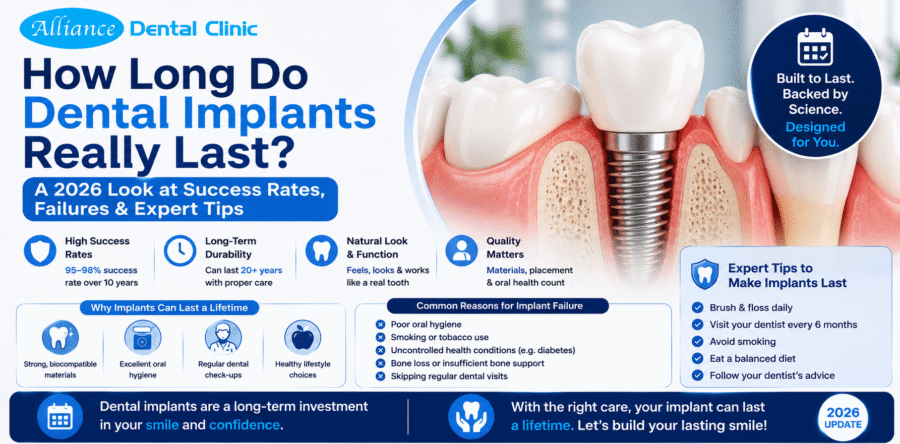
How long do dental implants really last? With proper care and regular dental checkups, the implant post itself can often last 20 years or longer, and many patients keep their dental implants for a lifetime. While the crown attached to the implant may eventually need replacement due to normal wear, the implant post is built to remain securely anchored in the jawbone for decades. According to long-term clinical research, modern implants have a success rate of approximately 95–98% in healthy patients who maintain good oral hygiene. As the Canadian Dental Association (CDA) notes, patients who are in good general health, have healthy gums, and have enough bone in the jaw are typically strong candidates for this long-term tooth replacement solution.
What Are Dental Implants?
Dental implants are artificial tooth roots that replace missing teeth by being surgically placed into the jawbone. Most implants are made from medical-grade titanium, while some patients may choose zirconia implants based on their individual needs. Unlike dentures or traditional bridges, implants replace the root of the missing tooth as well as the visible crown, creating a strong foundation that closely mimics the function of a natural tooth. At Alliance Dental Milton, our team plans every implant case around your long-term oral health, not just the finished smile.
A Typical Dental Implant Procedure Includes:
- Comprehensive dental examination
- Digital X-rays or 3D CBCT imaging
- Personalized treatment planning
- Implant placement surgery
- Healing period (osseointegration)
- Abutment placement
- Permanent dental crown attachment
One of the biggest advantages of dental implants is osseointegration — a natural process where the jawbone bonds with the implant surface. This connection helps provide excellent stability, supports healthy jawbone structure, and allows the implant to function much like a natural tooth. Patients weighing several dental services for a missing tooth often find implants offer the closest match to their original bite once healing is complete.
How Long Do Dental Implants Last?
The lifespan of a dental implant depends on several factors, including oral hygiene, overall health, lifestyle habits, and the quality of the implant procedure. However, modern implants are designed for long-term durability, which is one reason they are widely considered the gold standard for permanent tooth replacement.
Average Lifespan by Component:
| Component | Expected Lifespan |
| Implant Post | 20–30+ years (often a lifetime) |
| Dental Crown | 10–15 years (may vary depending on wear) |
| Implant Abutment | Often lasts as long as the implant |
While the crown may eventually need replacement because of normal chewing forces, the implant post itself can remain stable for decades when properly maintained. A crown replacement is a much smaller procedure than starting over with a new implant, which is why routine checkups matter so much for long-term value.
Why Do Dental Implants Last So Long?
Unlike removable dentures, dental implants become part of your jawbone through osseointegration. This secure bond provides stability that closely resembles a natural tooth root.
Long-Term Benefits of Osseointegration:
- Restore natural chewing ability
- Help preserve jawbone density
- Maintain facial structure after tooth loss
- Prevent neighboring teeth from shifting
- Provide excellent comfort and stability
- Improve confidence while eating and speaking
Expert Insight: The first stage of implant surgery places the post beneath the gum tissue, which is then stitched back into place; as the tissue heals over the following months, the implant bonds with the bone and an abutment is later attached to connect the replacement tooth. Because this bond is so secure, patients who follow their healing instructions closely tend to see the most predictable, long-lasting results. — Alliance Dental Team
What Factors Affect the Lifespan of Dental Implants?
Although dental implants have an excellent success rate, their longevity depends on several important factors.
1. Daily Oral Hygiene
Good oral hygiene is one of the most important factors in long-term implant success. Although implants cannot develop cavities, bacteria can still affect the surrounding gums and bone. Brushing twice daily, flossing around the implant, and using any recommended cleaning aids help reduce plaque buildup and lower the risk of infection.
2. Regular Dental Checkups
Routine dental visits allow your dentist to monitor the health of your implant and surrounding tissues. Professional cleanings remove hardened plaque that cannot be eliminated through brushing alone, and early detection of inflammation or bite-related issues often prevents more serious complications. This is one of the reasons preventive dental care remains just as important after implant treatment as it was before.
3. Smoking and Tobacco Use
Smoking remains one of the leading risk factors for implant failure. Tobacco reduces blood flow to the gums, delays healing after the dental implant procedure, and increases the risk of infection and bone loss around the implant. Health Canada reports that people who smoke are significantly more likely to develop the harmful bacteria associated with gum disease, which is exactly the kind of tissue an implant depends on for support. Patients who stop smoking before and after implant surgery generally experience better healing and improved long-term outcomes.
4. Jawbone Health
A healthy jawbone provides the strong foundation needed to support a dental implant. If bone loss has occurred due to long-term tooth loss, gum disease, or injury, your dentist may recommend bone grafting before implant placement. Modern regenerative techniques have made implant treatment possible for many patients who previously lacked sufficient bone support.
5. Teeth Grinding (Bruxism)
Grinding or clenching your teeth places repeated pressure on implants and natural teeth. Over time, excessive bite forces may loosen implant components or increase wear on the dental crown. A custom night guard can help protect your restoration while you sleep.
6. General Health Conditions
Your overall health also plays an important role in implant success. Conditions that may affect healing include poorly controlled diabetes, active gum disease, autoimmune disorders, osteoporosis, and certain medications that influence bone metabolism. A thorough dental evaluation helps determine whether dental implants are the right option for your individual needs.
What Causes Dental Implant Failure?
Although implant failure is uncommon, understanding the possible causes can help patients protect their investment and maintain long-term oral health. Dental implant failure generally falls into two categories: early failure and late failure.
Early Implant Failure
Early failure usually occurs within the first few months after surgery, before the implant has fully integrated with the jawbone.
- Infection after surgery
- Poor osseointegration
- Insufficient bone support
- Excessive movement during healing
- Smoking
- Uncontrolled medical conditions affecting healing
Following your dentist’s aftercare instructions and attending scheduled follow-up visits significantly improves the likelihood of successful healing.
Late Implant Failure
Late implant failure develops months or even years after the implant has successfully healed. Common causes include:
Peri-Implantitis
Peri-implantitis is an inflammatory condition that affects the tissues surrounding a dental implant. If left untreated, it can lead to progressive bone loss and, eventually, implant failure. Regular dental cleanings, good home care, and early treatment of gum inflammation are essential for preventing this condition.
Excessive Bite Pressure
Heavy chewing forces, untreated teeth grinding, or an uneven bite can place stress on the implant over time. Regular bite evaluations help ensure forces are distributed evenly.
Poor Oral Hygiene
Neglecting daily oral care allows plaque and bacteria to accumulate around the implant, increasing the risk of gum inflammation and bone loss. Consistent brushing, flossing, and routine dental visits remain the most effective ways to protect the long-term health of your implant.
Dental Implants vs. Bridges vs. Dentures: Which Tooth Replacement Option Lasts Longer?
If you’re comparing different tooth replacement options, understanding how they differ in durability, maintenance, and oral health benefits can help you make an informed decision.
| Feature | Dental Implants | Dental Bridge | Dentures |
| Average Lifespan | 20–30+ years (implant post) | 5–15 years | 5–10 years |
| Replaces Tooth Root | Yes | No | No |
| Preserves Jawbone | Yes | No | No |
| Feels Like Natural Teeth | Excellent | Good | Moderate |
| Can Be Removed | No | No | Yes |
| Affects Nearby Teeth | No | Yes | No |
| Daily Stability | Excellent | Very Good | May shift over time |
Implants are often recommended because they replace both the missing tooth and its root, helping preserve jawbone health while providing long-term stability. However, the right treatment depends on your oral health, treatment goals, and your dentist’s clinical evaluation. Patients who are missing several teeth in a row sometimes also compare implants against a fixed bridge solution before deciding which fits their budget and lifestyle.
How to Make Your Dental Implants Last Longer
Although dental implants are designed for long-term durability, their lifespan depends largely on how well they are cared for after treatment.
Brush and Floss Every Day
Maintain a consistent oral hygiene routine by brushing twice daily and flossing around the implant. This helps remove plaque and reduces the risk of gum disease and peri-implantitis.
Schedule Regular Dental Checkups
Professional cleanings and routine examinations allow your dentist to monitor the health of your implant, gums, and surrounding bone. Early detection of problems often prevents more complex treatment later.
Avoid Smoking
Smoking significantly increases the risk of implant complications by slowing healing and reducing blood flow to the gums. Quitting smoking benefits both your oral and overall health.
Wear a Night Guard if Recommended
If you grind or clench your teeth, a custom night guard can help protect your implant and reduce excessive pressure on the restoration.
Maintain a Healthy Lifestyle
Eating a balanced diet, staying hydrated, and managing conditions such as diabetes contribute to healthier gums and stronger bone support around the implant.
Expert Insight: Good oral hygiene habits established well before treatment tend to carry through afterward. Patients who already visit for routine cleanings every six months usually adjust to implant maintenance with almost no extra effort, since it simply builds on the routine they already have. — Alliance Dental Team
Who Is a Good Candidate for Dental Implants?
Most healthy adults with one or more missing teeth may qualify for dental implants, but every patient requires a comprehensive dental evaluation.
You May Be a Suitable Candidate If You:
- Have one or more missing teeth
- Have healthy gums
- Have sufficient jawbone to support an implant
- Practice good oral hygiene
- Attend regular dental visits
- Are willing to follow post-treatment care instructions
Even if bone loss has occurred, procedures such as bone grafting may help prepare the jaw for successful implant placement. If you’re unsure whether implants or another restorative option is the better route for a struggling tooth, a consultation is the best place to start.
What’s New in Dental Implant Treatment in 2026?
Modern dentistry continues to improve the safety, precision, and predictability of the dental implant procedure. Some of the latest advancements include:
Digital Smile Planning
Advanced digital imaging and treatment planning software allow dentists to plan implant placement with greater precision before surgery begins.
Guided Implant Surgery
Computer-guided surgical techniques help place implants more accurately, often reducing surgical time and supporting a smoother recovery.
High-Performance Implant Materials
Today’s titanium and zirconia implants are engineered for excellent strength, biocompatibility, and long-term performance.
Enhanced Bone Regeneration
Modern bone grafting materials and regenerative techniques have expanded treatment options for patients with reduced jawbone volume.
Improved Digital Restorations
CAD/CAM technology enables highly accurate, custom-made crowns that improve fit, function, and aesthetics. These advancements continue to improve treatment outcomes while making implant therapy more comfortable and predictable.
Explore More Dental Services at Alliance Dental Milton
Whether you need a single tooth replaced or a complete smile restoration, Alliance Dental Clinic in Milton offers comprehensive dental care for the whole family. In addition to implants, our full range includes:
- Family dentistry — comprehensive care for every member of your household
- Root canal treatment — saving a natural tooth before it requires extraction
- Dental crowns and bridges — restoring damaged or missing teeth
- Orthodontic treatment — braces and bite correction for all ages
- Invisalign clear aligners — discreet teeth straightening
- Tooth extractions — gentle removal when a tooth can’t be saved
- Emergency dental care — same-day appointments for urgent issues
Final Thoughts: A Long-Term Investment in Your Smile
Dental implants continue to be one of the most trusted and effective solutions for replacing missing teeth in 2026. Their high success rates, long lifespan, and ability to preserve jawbone health make them an excellent option for many patients seeking a permanent tooth replacement solution. While no dental treatment can guarantee lifetime results, good oral hygiene, routine dental visits, and healthy lifestyle habits significantly improve the chances of long-term success with dental implants.
Choosing an experienced dental professional and following recommended aftercare instructions are equally important. In Milton, Ontario, our hygienists and dentists follow current Canadian Dental Association guidance on preventive care and combine it with modern implant planning technology. If you’re considering missing teeth treatment, schedule a comprehensive consultation to determine whether dental implants are the right choice for your smile, oral health, and long-term goals.
FAQ: Dental Implants – Lifespan, Success Rates, and More
Q: Can dental implants really last a lifetime?
A: Yes. In many cases, the implant post can last a lifetime when placed correctly and maintained with excellent oral hygiene and regular professional care. The crown attached to the implant may require replacement after years of normal use.
Q: What is the success rate of dental implants?
A: Clinical studies consistently report success rates of approximately 95–98% for healthy patients. Success depends on factors such as oral hygiene, bone quality, overall health, and following your dentist’s recommendations.
Q: What is the most common reason dental implants fail?
A: One of the leading causes is peri-implantitis, an infection affecting the tissues surrounding the implant. Smoking, poor oral hygiene, uncontrolled diabetes, and untreated gum disease can also increase the risk of failure.
Q: How long does the dental implant procedure take?
A: Treatment timelines vary depending on individual needs. Some patients complete treatment within a few months, while others may require additional healing time or preparatory procedures such as bone grafting before implant placement.
Q: Are dental implants better than dentures?
A: For many patients, dental implants provide greater comfort, improved chewing ability, better jawbone preservation, and a more natural feel than removable dentures. However, the best solution depends on each patient’s oral health, preferences, and treatment goals.

