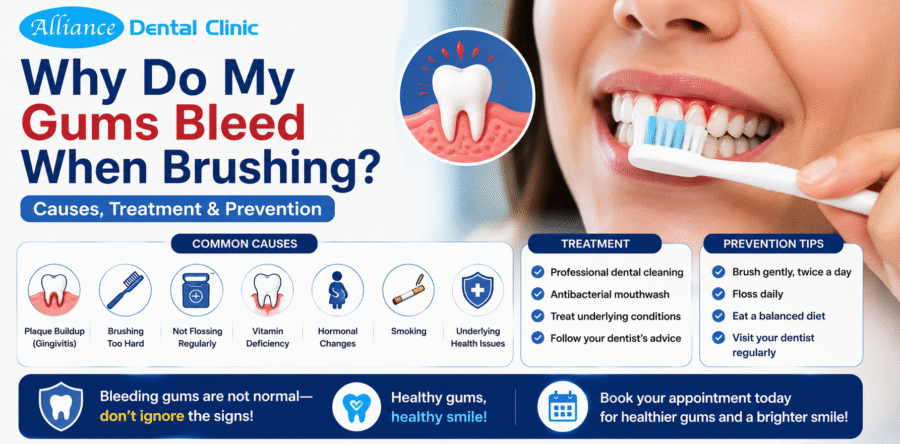
Bleeding gums while brushing can be concerning, especially if it happens regularly. Although occasional bleeding may occur after changing your brushing routine or flossing for the first time in a while, persistent bleeding is usually a sign that something isn’t right. In many cases, it indicates inflammation caused by plaque buildup or the early stages of gum disease. Taking action early can help restore healthy gums and prevent more serious oral health problems.
Your gums are the foundation of your smile. They support your teeth, protect the underlying bone, and help keep harmful bacteria from entering deeper tissues. When your gums become inflamed, even simple activities like brushing or flossing can cause them to bleed. The good news is that most causes of bleeding gums are preventable and treatable with proper oral hygiene and regular dental care.
At Alliance Dental Clinic, we believe prevention is the key to lifelong oral health. This guide explains why gums bleed when brushing, what the symptoms mean, available treatment options, and practical tips to maintain strong gums, healthy gum tissue, and lasting gum health.
Key Takeaways
- Healthy gums should not bleed during brushing or flossing.
- Gingivitis is the most common cause of bleeding gums.
- Daily brushing, flossing, and routine dental services such as professional cleanings help prevent gum disease.
- Persistent bleeding may indicate periodontal disease and should be evaluated by a dentist.
- Early treatment protects your teeth, gums, and overall oral health.
Why Do Healthy Gums Bleed When Brushing?
If your gums bleed while brushing, your body is often signaling that your gums are inflamed. The most common cause is plaque—a sticky layer of bacteria that builds up around the gumline. When plaque isn’t removed every day, it irritates the gums, causing redness, swelling, and bleeding. According to the Canadian Dental Association (CDA), gum disease can almost always be prevented, and when caught early, it can even be reversed.
Over time, plaque hardens into tartar, which cannot be removed by brushing alone. Tartar creates an ideal environment for bacteria to grow, increasing the risk of gingivitis and periodontal disease.
Bleeding gums may also result from:
- Brushing too aggressively
- Using a hard-bristled toothbrush
- Hormonal changes
- Certain medications
- Vitamin deficiencies
- Smoking or tobacco use
- Medical conditions such as diabetes
While occasional bleeding isn’t always serious, frequent or persistent bleeding should never be ignored because it may be an early warning sign of gum disease.
Did You Know? Gingivitis is reversible when treated early. Without treatment, however, it can progress to periodontitis, which may damage the bone supporting your teeth.
Common Causes of Bleeding Gums
1. Gingivitis
Gingivitis is the earliest stage of gum disease and the leading cause of bleeding gums. When plaque remains along the gumline, bacteria trigger inflammation, making the gums swollen, tender, and more likely to bleed during brushing or flossing.
Common symptoms include:
- Bleeding while brushing
- Red or swollen gums
- Tender gums
- Bad breath
- Mild gum irritation
With professional dental cleaning and improved oral hygiene, gingivitis can often be reversed before permanent damage occurs.
2. Plaque and Tartar Buildup
Plaque constantly forms on your teeth throughout the day. If it isn’t removed through brushing and flossing, it hardens into tartar.
Unlike plaque, tartar cannot be removed at home. It traps bacteria beneath the gumline, increasing inflammation and preventing healthy gum tissue from healing properly. Professional dental cleanings remove tartar safely and help restore gum health.
3. Brushing Too Hard
Many people assume brushing harder cleans better, but excessive force can injure the gums. Using a soft-bristled toothbrush and gentle circular motions effectively removes plaque while protecting delicate gum tissue. If your toothbrush bristles flatten quickly, you may be brushing with too much pressure.
4. Inconsistent Flossing
Bleeding may occur when you begin flossing after a long break. This usually happens because inflamed gums react to bacteria trapped between the teeth. As plaque is removed consistently, the inflammation often decreases and the bleeding stops within several days.
5. Periodontal Disease
Untreated gingivitis can progress into periodontitis, a more advanced form of gum disease. As bacteria spread deeper below the gumline, they begin damaging the bone and connective tissues supporting the teeth.
Signs of periodontal disease include:
- Frequent bleeding gums
- Gum recession
- Loose teeth
- Persistent bad breath
- Pain while chewing
- Increased tooth sensitivity
Early diagnosis significantly improves treatment outcomes. In cases where periodontitis has caused significant bone loss, teeth may eventually loosen beyond saving, which is why our team also offers dental implants to restore function and appearance once the underlying gum disease has been treated.
6. Vitamin Deficiencies
Certain nutrients play an important role in maintaining healthy gums. Low levels of Vitamin C may weaken gum tissue and slow healing, while Vitamin K helps support normal blood clotting. Eating a balanced diet rich in fruits, vegetables, and whole foods supports stronger gums and healthier oral tissues.
7. Hormonal Changes
Hormonal fluctuations during pregnancy, puberty, menstruation, and menopause can make gums more sensitive. Pregnancy gingivitis is particularly common because increased hormone levels allow gums to react more strongly to plaque bacteria. Maintaining excellent oral hygiene during these periods is especially important.
8. Medical Conditions and Medications
Some medical conditions and medications may increase the likelihood of bleeding gums. Examples include:
- Diabetes
- Blood-thinning medications
- Certain immune system disorders
- Dry mouth caused by medications
If you notice persistent bleeding after starting a new medication, speak with both your physician and dentist.
Signs Your Gum Health Needs Attention
Bleeding isn’t the only sign of unhealthy gums. According to Health Canada, healthy gums should be firm, pink in colour, and resistant to bleeding during brushing and flossing. Watch for these symptoms instead:
- Red or swollen gums
- Gum tenderness
- Persistent bad breath
- Gum recession
- Tooth sensitivity
- Loose teeth
- Pain when chewing
- Pus between the teeth and gums
- Changes in your bite
Recognizing these warning signs early allows treatment before permanent damage develops. In some advanced cases, misaligned bite pressure can make gum disease worse, which is why our orthodontic treatment options are sometimes recommended alongside periodontal care.
How Dentists Diagnose Bleeding Gums
If your gums continue to bleed despite good oral hygiene, your dentist will perform a comprehensive examination. This may include:
- Reviewing your dental and medical history
- Examining your gums for signs of inflammation
- Measuring periodontal pockets around each tooth
- Checking for plaque and tartar buildup
- Evaluating tooth mobility
- Taking dental X-rays to assess bone support when necessary
These findings help determine whether the problem is gingivitis, periodontitis, or another underlying condition.
Treatment Options for Healthy Gums
Treatment depends on the cause and severity of the problem.
Professional Dental Cleaning
Professional cleanings remove plaque and tartar from areas that brushing and flossing cannot reach. This reduces inflammation and helps restore healthy gum tissue.
Improved Home Oral Hygiene
Your dentist may recommend:
- Brushing twice daily with fluoride toothpaste
- Flossing once every day
- Using an antibacterial mouth rinse when appropriate
- Replacing your toothbrush every three to four months
- Using gentle brushing techniques
Consistency is essential for maintaining strong gums and preventing plaque buildup.
Scaling and Root Planing
If gum disease has progressed below the gumline, scaling and root planing may be recommended. This deep-cleaning procedure removes bacteria and tartar beneath the gums while smoothing the tooth roots, allowing the gums to heal and reattach more effectively.
Periodontal Therapy
Advanced periodontal disease may require specialized treatment to control infection, preserve supporting bone, and protect natural teeth. In rare cases where a tooth cannot be saved, our team can also discuss tooth extractions as part of your treatment plan. As outlined by the Ontario Dental Association (ODA), timely care greatly improves the chances of maintaining long-term gum health.
How to Keep Your Gums Healthy Every Day
Healthy gums don’t happen by chance—they’re the result of consistent oral hygiene and preventive dental care. Small daily habits can make a significant difference in reducing plaque buildup and lowering your risk of gum disease.
Follow these tips to maintain healthy gums:
- Brush your teeth twice a day using a soft-bristled toothbrush.
- Use fluoride toothpaste to strengthen your teeth.
- Floss daily to remove plaque between teeth.
- Clean your tongue to reduce harmful bacteria.
- Replace your toothbrush every three to four months.
- Drink plenty of water throughout the day.
- Limit sugary snacks and acidic beverages.
- Avoid smoking and tobacco products.
- Schedule routine dental examinations and professional cleanings.
- Follow your dentist’s recommendations for your individual oral health needs.
These simple habits help protect healthy gum tissue, reduce inflammation, and support long-term gum health.
Foods That Support Healthy Gums
A balanced diet contributes to healthier gums by providing nutrients that strengthen connective tissue and support your immune system.
Include these foods in your diet whenever possible:
Vitamin C-Rich Foods
Vitamin C supports collagen production, which helps maintain healthy gum tissue. Examples include:
- Oranges
- Strawberries
- Kiwi
- Bell peppers
- Broccoli
Calcium-Rich Foods
Calcium strengthens the teeth and jawbone. Good sources include:
- Milk
- Yogurt
- Cheese
- Fortified plant-based beverages
Omega-3 Fatty Acids
Omega-3s may help support a healthy inflammatory response. Foods include:
- Salmon
- Sardines
- Walnuts
- Chia seeds
Crunchy Fruits and Vegetables
Foods like apples, carrots, and celery stimulate saliva production and help remove food particles from the teeth.
Water
Staying hydrated helps wash away bacteria and supports saliva production, which naturally protects your mouth.
Can Bleeding Gums Be Prevented?
Yes. In many cases, bleeding gums can be prevented through consistent oral hygiene and routine preventive dental care.
Here are some practical ways to reduce your risk:
- Brush gently rather than aggressively.
- Floss every day.
- Visit your dentist for regular dental cleanings.
- Eat a balanced diet rich in vitamins and minerals.
- Manage health conditions such as diabetes.
- Avoid tobacco products.
- Replace worn toothbrushes regularly.
- Address dental problems before they become more serious.
Preventive care is one of the most effective ways to maintain strong gums and a healthy smile. Many of our patients ask questions about these steps in person — you’re always welcome to browse our frequently asked questions for quick answers between visits.
When Should You See a Dentist?
Occasional bleeding may resolve after improving your brushing and flossing routine. However, persistent bleeding should always be evaluated by a dental professional.
Schedule an appointment if you notice:
- Bleeding that lasts longer than one week.
- Bleeding every time you brush or floss.
- Swollen, painful, or tender gums.
- Gum recession.
- Loose teeth.
- Persistent bad breath.
- Pus around the gums.
- Pain while chewing.
Early diagnosis often allows for simpler treatment and helps prevent long-term damage to your teeth and gums. If your symptoms feel sudden or severe, our emergency dental care team is available to see you promptly.
Myth vs. Fact
| Myth | Fact |
| Bleeding gums are normal. | Healthy gums generally do not bleed during brushing or flossing. |
| Brushing harder cleans better. | Gentle brushing with a soft-bristled toothbrush removes plaque without damaging gum tissue. |
| If my gums bleed, I should stop flossing. | Regular flossing removes plaque and often helps reduce bleeding as the gums become healthier. |
| Only older adults develop gum disease. | Gum disease can affect people of almost any age if plaque accumulates along the gumline. |
| Mouthwash alone can cure bleeding gums. | Mouthwash supports oral hygiene but cannot replace brushing, flossing, and professional dental care. |
Frequently Asked Questions
1. Why do my gums bleed every time I brush my teeth?
The most common cause is gingivitis, which develops when plaque builds up along the gumline. Other causes include brushing too hard, tartar buildup, hormonal changes, vitamin deficiencies, certain medications, or underlying health conditions.
2. Is it normal for my gums to bleed when I start flossing?
Mild bleeding may occur if you have recently started flossing after a long break because inflamed gums begin healing as plaque is removed. If bleeding continues for more than a week, schedule a dental examination.
3. Can brushing too hard damage healthy gums?
Yes. Excessive brushing pressure can injure healthy gum tissue, leading to irritation, recession, and bleeding. A soft-bristled toothbrush and gentle brushing technique are recommended.
4. How can I improve my gum health naturally?
Maintain good oral hygiene by brushing twice daily, flossing every day, eating a balanced diet rich in vitamins, staying hydrated, avoiding tobacco, and visiting your dentist for routine preventive care.
5. Will a professional dental cleaning stop my gums from bleeding?
If plaque and tartar buildup are causing inflammation, a professional dental cleaning can significantly improve gum health. Combined with good home care, many patients notice healthier gums and less bleeding after treatment.
Final Thoughts
Bleeding gums are often one of the earliest signs that your oral health needs attention. While occasional bleeding may have a simple explanation, persistent bleeding usually indicates inflammation that should not be ignored. Addressing the problem early helps prevent gingivitis from progressing to more advanced gum disease.
Maintaining healthy gums requires more than brushing your teeth. Daily flossing, balanced nutrition, routine dental visits, and professional cleanings all work together to protect your smile. Consistent preventive care helps preserve healthy gum tissue, supports strong gums, and lowers the risk of future dental complications.
If you’re experiencing bleeding gums or other signs of gum disease, the team at Alliance Dental Clinic is here to help. Through comprehensive examinations, preventive care, and personalized treatment plans, we can help you improve your oral health and keep your smile healthy for years to come. Schedule your appointment today and take the next step toward healthier gums.

