Quick Answer
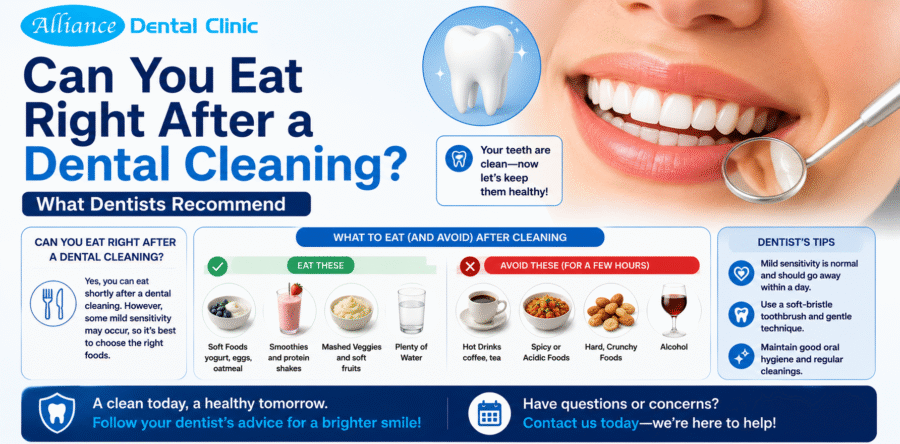
At Alliance Dental Clinic in Milton, Ontario, this is one of the questions we hear most often after an appointment. Yes, most people can eat after a routine dental cleaning. However, if your dentist applied a fluoride treatment, you should wait at least 30 minutes before eating or drinking. If you had a deep cleaning (scaling and root planing), choose soft foods until the numbness wears off and your gums feel comfortable.
Can You Eat Right After a Dental Cleaning?
A dental cleaning is one of the easiest and most effective ways to maintain healthy teeth and gums. Even though the procedure is routine, many patients leave the office wondering, “Can I eat right after my appointment?”
The answer depends on the type of professional teeth cleaning you received. For a standard cleaning, you can usually eat soon after your appointment if you feel comfortable. However, if fluoride was applied or you had a deep cleaning, your dentist may recommend waiting before eating to help protect your teeth and maximize the benefits of treatment.
Following the right aftercare instructions helps reduce sensitivity, protects your enamel, and keeps your smile healthier between visits.
In this guide, you’ll learn:
- When you can safely eat after a dental cleaning
- Why dentists sometimes recommend waiting
- The best foods to eat after teeth cleaning
- Foods and drinks to avoid
- Tips for reducing tooth sensitivity
- When you should contact your dentist
Whether you’re preparing for your next appointment or you’ve just completed one, these dentist-approved recommendations will help you recover comfortably.
Why Following Aftercare Instructions Matters
Many people think a dental cleaning ends when they leave the dental office. In reality, the care you take during the first few hours after your appointment plays an important role in protecting your oral health.
Following your dentist’s instructions can help:
- Strengthen tooth enamel after fluoride treatment
- Reduce temporary tooth sensitivity
- Allow irritated gums to recover
- Lower the risk of discomfort after treatment
- Maintain the results of your professional teeth cleaning
A few simple habits after your appointment can make a noticeable difference in how comfortable your mouth feels.
When Can You Eat After a Dental Cleaning?
For most routine dental cleaning appointments, you can eat as soon as you feel comfortable.
However, your dentist may recommend waiting depending on the treatment you received.
| Type of Dental Cleaning | When You Can Eat |
| Routine dental cleaning | Immediately if comfortable |
| Cleaning with fluoride treatment | Wait at least 30 minutes |
| Deep cleaning (Scaling & Root Planing) | Wait until numbness wears off |
| Cleaning with gum tenderness | Soft foods for the first 24 hours |
If local anesthesia was used during a deep cleaning, wait until the numbness completely disappears before eating. This helps prevent accidentally biting your tongue, lips, or cheeks.
Why Dentists Recommend Waiting Before Eating
Although eating immediately is often safe, there are several reasons dentists may advise waiting.
1. Fluoride Needs Time to Protect Your Teeth
Many dental hygiene services include a fluoride treatment at the end of your appointment.
Fluoride strengthens enamel by helping minerals bond to the surface of your teeth. Eating or drinking too soon can reduce the amount of time fluoride stays in contact with your teeth, limiting its protective effect.
Waiting at least 30 minutes allows fluoride to work as intended. Health Canada notes that fluoride has been used safely to prevent tooth decay since the 1940s, and works by strengthening enamel, lowering acid levels, and rebuilding minerals in the tooth surface.
2. Your Teeth May Feel More Sensitive
After plaque and tartar are removed, your teeth may temporarily become more sensitive to hot, cold, or sweet foods.
This happens because areas that were previously covered by tartar are now exposed.
Fortunately, this sensitivity usually improves within a few days.
3. Your Gums Need Time to Recover
Even a gentle professional teeth cleaning can leave your gums slightly tender, especially if significant tartar was removed.
Eating crunchy or hard foods immediately afterward may irritate these areas and increase discomfort.
Allowing your gums a little time to recover can make eating much more comfortable.
4. Deep Cleaning Requires Extra Care
If you underwent scaling and root planing, your gums need additional time to heal.
Your dentist may recommend eating soft foods for the first day and avoiding spicy, crunchy, or acidic foods until tenderness improves.
Following these instructions supports faster healing and helps prevent unnecessary irritation.
What Can You Eat After a Dental Cleaning?
The foods you choose after your appointment can make recovery easier, especially if your teeth or gums feel sensitive.
Here are some dentist-recommended options.
Soft Fruits
Soft fruits provide vitamins without putting pressure on sensitive teeth. Good choices include:
- Bananas
- Ripe peaches
- Avocados
- Applesauce
- Soft pears
Yogurt
Plain yogurt is soft, cool, and easy to eat after a dental cleaning. It also contains beneficial probiotics that may support a healthy balance of bacteria in your mouth. Choose unsweetened varieties whenever possible.
Scrambled Eggs
Eggs are rich in protein and gentle on sore gums. Scrambled eggs are an excellent breakfast option after teeth cleaning because they require very little chewing.
Oatmeal
Warm oatmeal provides fiber and energy without irritating freshly cleaned teeth. Avoid serving it too hot if your teeth feel sensitive.
Soup
Lukewarm soups are another excellent option. Choose soups such as:
- Vegetable soup
- Chicken soup
- Tomato soup (if your teeth aren’t sensitive to acidity)
- Lentil soup
Allow hot soup to cool slightly before eating.
Smoothies
Smoothies are easy to consume and packed with nutrients. Use ingredients such as:
- Banana
- Yogurt
- Blueberries
- Spinach
- Oats
If you’ve had a deep cleaning, avoid drinking through a straw unless your dentist says it’s safe.
Cooked Vegetables
Soft, cooked vegetables are gentle on your gums while providing important vitamins and minerals. Examples include:
- Sweet potatoes
- Carrots
- Broccoli
- Squash
- Green beans
Rice and Pasta
Plain rice and soft pasta dishes are comfortable choices while your mouth adjusts after treatment. Pair them with lean protein for a balanced meal.
Foods to Avoid After Dental Cleaning
Although there aren’t many restrictions after a routine dental cleaning, avoiding certain foods for a few hours can help reduce discomfort.
Hard Foods
Avoid foods that require heavy chewing, including:
- Ice
- Hard candy
- Nuts
- Popcorn
These foods may irritate tender gums.
Sticky Foods
Sticky foods can cling to freshly cleaned teeth and place unnecessary pressure on sensitive areas. Examples include:
- Caramel
- Taffy
- Chewy candy
- Gummy snacks
Extremely Hot Foods and Drinks
Freshly cleaned teeth may be more sensitive to heat. Wait until beverages such as coffee or tea cool slightly before drinking them.
Ice-Cold Drinks
Cold drinks can trigger temporary sensitivity, especially if you have exposed tooth roots or gum recession. Choose room-temperature water until sensitivity improves.
Acidic Foods
Limit acidic foods immediately after treatment, including:
- Oranges
- Lemons
- Grapefruit
- Vinegar-based foods
These may increase temporary sensitivity.
Dark-Colored Beverages
If fluoride treatment was applied, your dentist may recommend avoiding:
- Coffee
- Tea
- Red wine
- Cola
for several hours to help protect the fluoride coating.
Dentist’s Tip: If your teeth remain sensitive for more than 72 hours after a dental cleaning, or if you experience severe pain, swelling, or prolonged bleeding, schedule a dental examination. Persistent discomfort may indicate an underlying dental condition rather than normal post-cleaning sensitivity. — Alliance Dental Team
Recovery After Different Types of Dental Cleaning
Not every dental cleaning is the same. Your recovery depends on the type of treatment performed and the condition of your teeth and gums.
Routine Dental Cleaning
A routine cleaning removes plaque, tartar, and surface stains from above the gumline. Most patients can return to their normal routine immediately after the appointment. If you did not receive fluoride treatment, you can usually eat as soon as you feel comfortable.
Deep Cleaning (Scaling and Root Planing)
A deep cleaning is recommended when plaque and tartar have built up below the gumline. Since this treatment is more extensive, your gums may feel tender for a day or two.
To support healing:
- Eat soft foods for the first 24 hours.
- Avoid crunchy or spicy foods.
- Brush gently around sensitive areas.
- Follow any aftercare instructions provided by your dentist.
Healing times vary, but most patients notice significant improvement within a few days.
How Long Does Tooth Sensitivity Last After Teeth Cleaning?
Temporary sensitivity is one of the most common concerns after professional teeth cleaning. Fortunately, it usually improves within 24 to 72 hours.
Sensitivity happens because removing plaque and tartar exposes areas of the tooth that were previously covered. This temporary reaction is normal and often resolves on its own. The Ontario Dental Association (ODA) notes that sensitivity often occurs when the protective enamel is temporarily exposed, and recommends telling your dentist if the sensitivity is severe or lasts longer than expected.
You can reduce discomfort by:
- Using toothpaste for sensitive teeth.
- Brushing with a soft-bristled toothbrush.
- Drinking room-temperature water.
- Avoiding extremely hot or cold foods.
- Maintaining your regular oral hygiene routine.
If sensitivity continues for more than a week or becomes severe, contact your dentist for an evaluation.
Common Mistakes to Avoid After Dental Cleaning
Following a few simple precautions helps protect the results of your dental hygiene services.
Eating Too Soon After Fluoride Treatment
Fluoride strengthens tooth enamel, but it needs time to remain on the teeth. Eating immediately after treatment may reduce its effectiveness. Always follow the waiting period recommended by your dental professional.
Drinking Very Hot or Ice-Cold Beverages
Freshly cleaned teeth can be more sensitive than usual. Choosing lukewarm or room-temperature beverages for the first few hours often feels more comfortable.
Choosing Hard or Crunchy Foods
Foods such as popcorn, nuts, hard crackers, and chips can irritate tender gums, especially after a deep cleaning. Instead, choose softer meals until your mouth feels normal again.
Skipping Your Oral Hygiene Routine
Some patients avoid brushing because they think their teeth need to “rest.” In reality, continuing your brushing and flossing routine helps prevent plaque from building up again. Brush gently using a fluoride toothpaste and a soft-bristled toothbrush.
Smoking Immediately After Treatment
Smoking may slow gum healing and increase staining after teeth cleaning. Avoiding tobacco products after your appointment supports healthier gums and better long-term oral health.
How to Maintain the Benefits of Your Dental Cleaning
A professional cleaning is only one part of maintaining a healthy smile. Daily habits play an equally important role.
To keep your teeth and gums healthy:
- Brush twice daily using fluoride toothpaste.
- Floss once every day.
- Drink plenty of water throughout the day.
- Limit sugary snacks and beverages.
- Eat a balanced diet rich in fruits and vegetables.
- Replace your toothbrush every three to four months.
- Schedule regular professional teeth cleaning appointments as recommended by your dentist.
These habits help reduce plaque buildup and lower the risk of tooth decay and gum disease.
When Should You Contact Your Dentist?
While mild discomfort is normal after a dental cleaning, certain symptoms should not be ignored.
Contact your dentist if you experience:
- Severe or worsening tooth pain.
- Swelling of the gums or face.
- Heavy bleeding that doesn’t stop.
- Fever or signs of infection.
- Sensitivity lasting longer than one week.
- Difficulty chewing after several days.
Prompt evaluation can help identify underlying problems before they become more serious. For urgent symptoms like these, Alliance Dental’s emergency dental care team is available for prompt assessment beyond normal post-cleaning sensitivity.
Why Regular Dental Cleaning Matters
Routine dental cleaning is one of the most effective preventive dental treatments available. It helps remove plaque and tartar that cannot be eliminated by brushing and flossing alone. The Canadian Dental Association (CDA) notes that regular dental check-ups and cleanings help remove unhealthy buildup and reduce the risk of dental decay and gum disease.
Benefits include:
- Reducing the risk of cavities.
- Helping prevent gum disease.
- Removing surface stains.
- Freshening your breath.
- Supporting healthier gums.
- Detecting oral health concerns early.
- Preserving your natural teeth.
When combined with daily oral hygiene and regular dental checkups, dental hygiene services contribute to better long-term oral health and a healthier smile.
Explore More Dental Services at Alliance Dental Milton
Beyond routine cleanings, Alliance Dental Clinic offers a full range of dental services for the whole family in Milton, Ontario. Our team also provides:
- Orthodontic treatment — braces, aligners, and bite correction for all ages
- Root canal treatment — saving infected or decayed teeth before extraction becomes necessary
- Dental implants — a permanent, natural-looking solution for missing teeth
- Invisalign clear aligners — discreet, comfortable teeth straightening
Frequently Asked Questions
1. Can I eat immediately after a dental cleaning?
Yes. If you had a routine dental cleaning without fluoride treatment, you can usually eat immediately if your mouth feels comfortable. If fluoride was applied, wait at least 30 minutes or follow your dentist’s instructions.
2. What are the best foods to eat after professional teeth cleaning?
Soft foods such as yogurt, scrambled eggs, oatmeal, bananas, smoothies, soup, cooked vegetables, pasta, and rice are excellent choices, especially if your gums feel tender.
3. Why do my teeth feel sensitive after teeth cleaning?
Temporary sensitivity is common because plaque and tartar have been removed, exposing areas of the teeth that were previously covered. This usually improves within a few days.
4. Can I drink coffee after a dental cleaning?
If you did not receive fluoride treatment, you can usually drink coffee once your mouth feels comfortable. If fluoride was applied, wait at least 30 minutes. If fluoride varnish was used, follow your dentist’s specific aftercare instructions.
5. How often should I schedule a dental cleaning?
Most people benefit from a professional teeth cleaning every six months. However, your dentist may recommend more frequent visits if you have gum disease, a history of plaque buildup, or other oral health concerns.
Final Thoughts
Knowing when to eat after a dental cleaning helps you get the most from your appointment while protecting your teeth and gums. In most cases, you can eat shortly after a routine cleaning. However, if fluoride treatment was applied or you had a deep cleaning, waiting the recommended amount of time and choosing soft foods can make recovery more comfortable.
Maintaining healthy habits after your appointment — including brushing, flossing, eating a balanced diet, and scheduling regular dental visits — helps keep your smile healthy year-round.
At Alliance Dental Clinic, we provide personalized dental hygiene services designed to support your long-term oral health. Whether you need a routine professional teeth cleaning, preventive care, or a comprehensive dental examination, our team is here to help you achieve and maintain a healthy, confident smile. If it’s time for your next cleaning, schedule an appointment with our team and take the next step toward better oral health.

