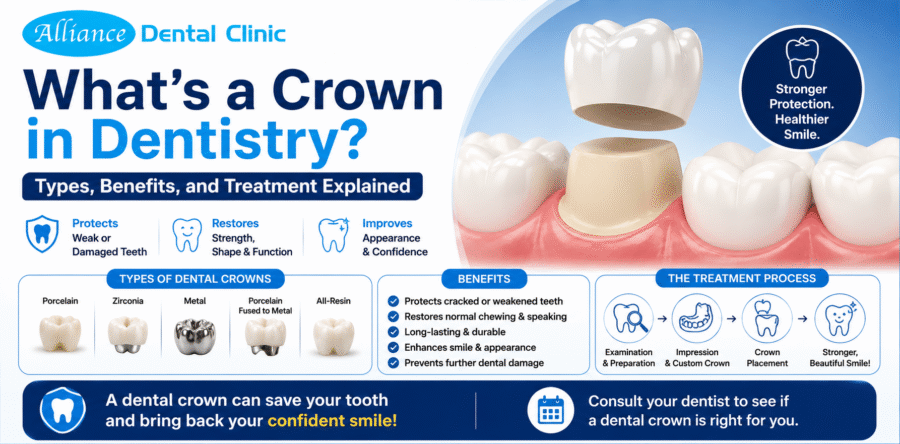
What’s a crown in dentistry? A dental crown is a custom-made cap that restores and protects a damaged or weakened tooth. In addition, modern crowns are available in materials such as porcelain, zirconia, metal, and porcelain-fused-to-metal. As a result, the dental crown procedure usually takes two appointments, although some clinics offer same-day crowns. At Alliance Dental Milton, our team customizes every crown treatment to your individual tooth structure and smile goals.
What’s a Crown in Dentistry?
A dental crown is a tooth-shaped restoration that completely covers the visible part of a damaged tooth above the gum line. It restores the tooth’s strength, shape, size, and appearance while protecting it from additional damage. According to the Canadian Dental Association (CDA), a crown is a hollow, artificial tooth used to cover a damaged or decayed tooth, restoring both function and appearance.
Dentists recommend dental crown treatment when a tooth has become too weak for a filling but can still be preserved. Instead of removing the tooth, a crown strengthens it and allows it to function normally. Whether you’ve chipped a tooth, completed root canal treatment, or have a worn-down tooth from years of grinding, a tooth crown can often provide a long-lasting solution.
Why Is a Dental Crown Important?
Natural teeth experience constant pressure from chewing, biting, and everyday use. When a tooth becomes cracked, weakened, or heavily restored, it may no longer withstand these forces. A dental crown acts like a protective shield by covering the damaged tooth and distributing chewing pressure more evenly. This helps reduce the risk of fractures while restoring normal function.
Beyond protection, crowns also improve the appearance of damaged or discolored teeth, helping patients smile with greater confidence.
When Do You Need a Dental Crown?
Many people wonder whether they actually need a crown or if a filling will be enough. Your dentist may recommend a dental crown if you have:
- A cracked or fractured tooth
- A large cavity that cannot support a filling
- A worn-down tooth caused by grinding
- A weakened tooth after root canal treatment
- A broken filling that leaves little healthy tooth structure
- A misshapen or severely discolored tooth
- A dental implant that needs its final restoration
- A tooth that has become fragile over time
Treating the problem early often helps preserve your natural tooth and prevent more extensive dental procedures later, such as a tooth extraction.
Benefits of Dental Crown Treatment
Choosing dental crown treatment offers several long-term benefits beyond restoring a damaged tooth.
Restores Tooth Strength
A crown reinforces weakened teeth, allowing them to withstand normal biting and chewing forces.
Protects Against Further Damage
Without protection, cracked or weakened teeth may continue to break. A tooth crown provides full coverage, helping prevent additional fractures.
Improves Your Smile
Modern crowns are carefully designed to match the color, shape, and size of surrounding teeth, creating a natural-looking smile.
Restores Comfortable Chewing
Damaged teeth often make eating uncomfortable. A properly fitted dental crown restores normal chewing function so you can enjoy your favorite foods again.
Supports Teeth After Root Canal Treatment
After a root canal, the treated tooth can become more fragile. Placing a crown over the tooth provides additional protection and helps improve its long-term durability.
Long-Term Restoration
With proper care, many crowns continue functioning well for years. Daily brushing, flossing, and routine dental checkups help protect both the crown and the underlying tooth.
Types of Dental Crowns
Not every crown is made from the same material. Your dentist will recommend the best option based on the tooth’s location, bite pressure, appearance, and your oral health needs.
1. Porcelain Crowns
Porcelain crowns closely resemble natural tooth enamel, making them a popular choice for front teeth.
Advantages:
- Natural appearance
- Excellent color matching
- Metal-free
- Resistant to staining
They are ideal for patients who want highly aesthetic restorations.
2. Zirconia Crowns
Zirconia has become one of the most widely used materials in restorative dentistry because it combines strength with aesthetics. Benefits include:
- Exceptional durability
- High fracture resistance
- Natural appearance
- Suitable for both front and back teeth
3. Porcelain-Fused-to-Metal Crowns
These crowns combine the strength of a metal base with the appearance of porcelain. They are commonly recommended when additional durability is required while maintaining a tooth-colored appearance.
4. Metal Crowns
Gold and other metal alloys have been used successfully in dentistry for decades. Although less common today, they remain an excellent choice for some back teeth because they:
- Resist wear
- Rarely fracture
- Require minimal removal of healthy tooth structure
5. Temporary Resin Crowns
Temporary crowns protect your prepared tooth while your permanent dental crown is being fabricated in a dental laboratory. Although they are not designed for long-term use, they help maintain comfort and function between appointments.
The Dental Crown Procedure: Step by Step
One of the most searched questions online is: “What happens during the dental crown procedure?” The dental crown procedure is carefully planned to ensure your new restoration fits comfortably and functions like a natural tooth.
Step 1: Comprehensive Dental Examination
Your dentist begins by evaluating your oral health through:
- A clinical examination
- Digital X-rays, when needed
- Bite analysis
- Assessment of surrounding teeth and gums
If extensive decay or infection is present, it will usually be treated before placing the crown.
Step 2: Preparing the Tooth
Next, the damaged tooth is gently reshaped. A small amount of enamel is removed to create enough space for the new tooth crown. If much of the tooth has already been lost, your dentist may rebuild it with a strong dental core material before continuing.
Step 3: Digital Scanning or Dental Impressions
Once the tooth has been prepared, your dentist records its exact shape using either digital intraoral scanning or traditional dental impressions. These detailed measurements ensure your dental crown fits comfortably, aligns with your bite, and blends naturally with your surrounding teeth.
Step 4: Temporary Crown Placement
Because permanent crowns often require fabrication in a dental laboratory, a temporary crown is placed to protect the prepared tooth. During this period, it’s helpful to:
- Avoid chewing sticky foods
- Limit hard foods on the treated side
- Brush gently around the temporary crown
- Floss carefully to avoid dislodging it
These simple precautions help keep the temporary restoration secure until your next visit.
Step 5: Permanent Crown Placement
At the second appointment, your dentist will:
- Remove the temporary crown
- Check the fit and appearance
- Evaluate your bite
- Make minor adjustments if needed
- Secure the permanent dental crown using dental cement or bonding material
Once placed, the crown should feel comfortable and function much like a natural tooth.
Can a Dental Crown Look Natural?
Yes. Advances in dental materials and digital technology allow today’s crowns to closely match the color, texture, and translucency of natural teeth. Whether made from porcelain or zirconia, a well-crafted tooth crown is designed to blend seamlessly with your smile. Most people won’t be able to tell the difference between the crown and your natural teeth.
Recovery After a Dental Crown Procedure
Most patients return to their normal routine shortly after the dental crown procedure. You may notice mild sensitivity to hot, cold, or pressure for a few days, especially if the tooth was extensively treated. This usually improves as the tooth adjusts to the new restoration.
If your bite feels uneven or you experience persistent discomfort, schedule a follow-up visit. A small adjustment can often resolve the issue.
Tips for a Smooth Recovery
To help your new dental crown settle comfortably:
- Wait until the numbness wears off before eating
- Choose soft foods for the first 24 hours if your tooth feels sensitive
- Avoid chewing very hard foods on the treated tooth initially
- Brush and floss gently around the crown
- Continue your normal oral hygiene routine
Following your dentist’s instructions supports proper healing and long-term success.
How to Care for a Dental Crown
Although a tooth crown is made from durable materials, it still requires daily care. The crown itself cannot decay, but the natural tooth underneath and the surrounding gums remain vulnerable to cavities and gum disease. Good habits, alongside preventive dental care, help your crown last as long as possible.
Daily Care Tips
- Brush twice a day with fluoride toothpaste
- Floss once daily around the crown
- Use a soft-bristled toothbrush
- Limit sugary snacks and acidic drinks
- Avoid chewing ice, pens, or other hard objects
- Wear a night guard if you grind your teeth
- Visit your dentist every six months for routine examinations and professional cleanings
Good oral hygiene helps protect your investment and keeps your smile healthy.
How Long Does a Dental Crown Last?
One of the most common questions patients ask is: “How long does a dental crown last?” The lifespan of a dental crown depends on several factors, including:
- The crown material
- Daily oral hygiene habits
- Bite forces
- Teeth grinding or clenching
- Regular dental checkups
Many crowns remain functional for years when cared for properly. Routine examinations allow your dentist to monitor the crown and identify small issues before they become larger concerns. The Ontario Dental Association (ODA) notes that a crown usually requires more than one visit to complete and can be made from acrylic, metal, porcelain, or porcelain bonded to metal, with all-porcelain options looking closest to natural teeth.
Signs Your Dental Crown Needs Attention
While dental crown treatment is highly successful, you should contact your dentist if you notice:
- Pain when chewing
- A loose or moving crown
- Cracks or chips
- Persistent sensitivity
- Swollen or bleeding gums around the crown
- Food repeatedly getting trapped
- Changes in your bite
Early treatment can often prevent further damage and help preserve the underlying tooth. If a crown breaks or falls off outside regular hours, our emergency dental care team can see you promptly.
What Happens If You Delay Dental Crown Treatment?
Delaying treatment for a damaged tooth may increase the risk of:
- Larger fractures
- Tooth infection
- Difficulty chewing
- Increased wear on nearby teeth
- The need for more complex restorative procedures
Seeking treatment promptly can improve the chances of saving your natural tooth. The Canadian Dental Care Plan (CDCP) also classifies crowns as a major restorative service, so it’s worth asking your dentist about coverage before your consultation.
Dental Crown vs. Filling
People often ask whether they need a filling or a dental crown. A filling repairs a small area affected by decay or minor damage. It works well when most of the natural tooth remains healthy.
A tooth crown is recommended when the tooth has lost significant structure, has a large fracture, or has been weakened after root canal treatment. By covering the entire visible portion of the tooth, a crown provides greater strength and protection. Your dentist will recommend the option that best preserves your natural tooth.
Dental Crown vs. Veneer
Although they may look similar, crowns and veneers serve different purposes. A veneer covers only the front surface of a tooth and is mainly used to improve appearance, much like our teeth whitening treatments focus on cosmetic results. A dental crown covers the entire visible portion of the tooth, making it the preferred choice when additional strength and protection are needed.
Common Myths About Dental Crowns
Myth 1: Dental crowns look unnatural.
Fact: Modern porcelain and zirconia crowns are designed to closely match the color and shape of your natural teeth.
Myth 2: The dental crown procedure is painful.
Fact: Local anesthesia helps keep the procedure comfortable. Most patients experience only mild temporary sensitivity afterward.
Myth 3: A crown lasts forever without maintenance.
Fact: Regular brushing, flossing, and dental checkups are still essential for maintaining healthy gums and protecting the natural tooth beneath the crown.
Myth 4: Only older adults need crowns.
Fact: Anyone with a damaged, weakened, or heavily restored tooth may benefit from dental crown treatment, regardless of age.
Final Thoughts: Book Your Dental Crown Consultation
A dental crown treatment is one of the most reliable restorative treatments available in modern dentistry. It protects weakened teeth, restores normal chewing function, and improves the appearance of your smile while preserving as much natural tooth structure as possible.
Whether you need treatment after a root canal, have a cracked tooth, or want to strengthen a heavily restored tooth, understanding the dental crown procedure can help you feel more confident about your care. Maintaining good oral hygiene, attending regular dental checkups, and addressing dental problems early can help your tooth crown perform well for many years.
If you notice pain, damage, or changes in one of your teeth, scheduling a consultation with our team is the best way to determine whether a crown is the right solution for you.
Frequently Asked Questions
Q: What is a dental crown, and when is it needed?
A: A dental crown is a custom-made cap that covers a damaged or weakened tooth. Dentists commonly recommend it for cracked teeth, large cavities, worn teeth, or after root canal treatment to restore strength and function.
Q: How long does the dental crown procedure take?
A: The dental crown procedure is usually completed in two appointments. The first visit involves preparing the tooth and taking impressions, while the second visit is used to place the permanent crown. Some practices also offer same-day crowns using digital technology.
Q: Can a dental crown fall off?
A: Although uncommon, a crown can become loose if the cement wears down, the underlying tooth changes, or the crown is damaged. If this happens, avoid trying to fix it yourself and contact your dentist as soon as possible.
Q: Does a tooth crown require special cleaning?
A: No. A tooth crown should be brushed and flossed just like your natural teeth. Cleaning around the gumline is especially important to prevent plaque buildup and protect the tooth beneath the crown.
Q: Is a dental crown better than a filling?
A: It depends on the condition of the tooth. Fillings are ideal for small areas of damage, while a dental crown is usually recommended when the tooth has lost significant structure and requires full coverage for long-term protection. Our team at family dentistry services can help assess which option is right for you and your family.

