A root canal treatment is designed to remove infection inside a tooth while preserving your natural smile. Thanks to modern dental techniques and local anesthesia, the procedure is typically comfortable. However, many patients leave their appointment wondering, “How long will my mouth stay numb after a root canal treatment?”
In most cases, numbness lasts between 2 and 5 hours, although some patients — especially those treated on lower molars — may experience numbness for up to 6–8 hours. The recovery timeline depends on several factors, including the type of anesthetic used, the location of the treated tooth, and your body’s metabolism. Our team at Alliance Dental Clinic walks every patient through what to expect before the freezing is even administered.
Knowing what to expect after a root canal treatment can help you recover comfortably, avoid accidental injuries while your mouth is numb, and recognize when lingering numbness may require professional attention.
In this guide, you’ll learn the normal recovery timeline, what affects numbness after a root canal procedure, practical aftercare tips, and warning signs that shouldn’t be ignored.
Key Takeaways
- Most numbness after a root canal treatment disappears within 3–5 hours.
- Lower back teeth often remain numb longer because of the type of anesthetic injection used.
- Mild tenderness after the numbness wears off is usually a normal part of healing.
- Avoid eating or drinking hot beverages until full sensation returns.
- Contact your dentist if numbness lasts longer than 8–10 hours or is accompanied by facial weakness or severe swelling.
Why Does a Root Canal Treatment Cause Numbness?
Before beginning a root canal treatment, your dentist administers a local anesthetic to block pain during the procedure. This medication temporarily interrupts nerve signals in the treated area, allowing the dentist to perform the treatment comfortably while you remain awake. According to the Canadian Dental Association (CDA) and the Canadian Academy of Endodontics (CAE), root canal treatment is routinely performed successfully by dentists across Canada, and freezing is a standard, well-understood part of the process.
During the anesthetic’s effect, it’s normal to experience numbness in the:
- Lips
- Cheeks
- Tongue
- Gums
- Chin (especially after lower tooth treatment)
This temporary numbness is a routine part of root canal therapy and usually fades gradually as your body processes the anesthetic.
Unlike the infection inside the tooth, the numbness itself is not harmful. Instead, it protects you from discomfort while your dentist, or a dentist with advanced training known as an endodontist, performs the treatment. The Canadian Academy of Endodontics notes that endodontists complete two or more years of additional training beyond dental school specifically to manage this kind of pulp and root canal treatment.
How Long Does Root Canal Numbness Last?
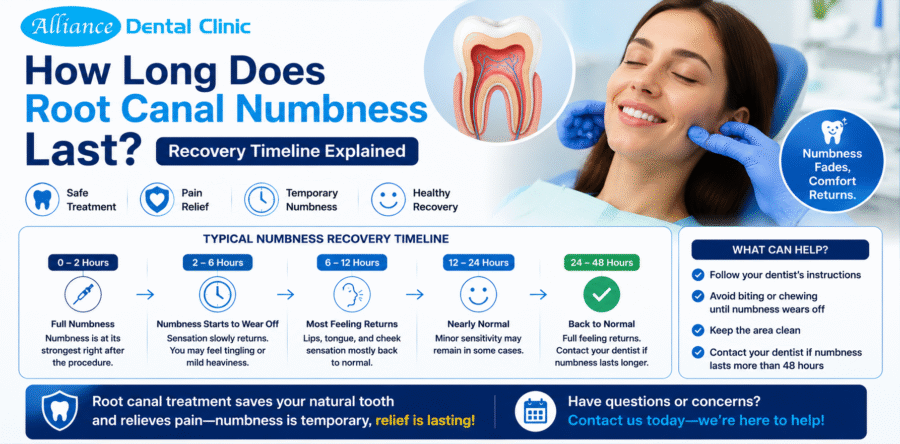
The exact duration varies from person to person, but the following timeline reflects what most patients experience after a root canal treatment.
| Recovery Stage | What You Can Expect |
| Immediately after treatment | Complete numbness around the treated area |
| 1–2 hours | Maximum numbness |
| 2–4 hours | Tingling begins as sensation slowly returns |
| 3–5 hours | Most patients regain normal feeling |
| Up to 6–8 hours | Possible after lower molar treatment or longer-lasting anesthetic |
Most people recover without any complications, and the numbness disappears on its own without requiring treatment.
Root Canal Treatment Recovery Timeline
Understanding each stage of recovery can help you feel more confident after your appointment.
Immediately After Your Root Canal Procedure (0–1 Hour)
When your root canal procedure is complete, your mouth may still feel completely numb.
You may notice:
- Difficulty speaking clearly
- A heavy feeling in your lip or cheek
- Mild drooling
- Reduced ability to feel hot or cold
- Trouble chewing normally
These effects are temporary and expected.
During this time, avoid chewing food because you may accidentally bite your tongue or cheek without realizing it.
One to Three Hours After Treatment
As the local anesthetic begins wearing off, you may notice:
- Tingling sensations
- Gradual return of feeling
- Improved speech
- Better jaw movement
Some people experience mild tenderness around the treated tooth during this stage. This discomfort is usually caused by inflammation around the tooth rather than the anesthesia itself.
Three to Five Hours After Treatment
For most patients, this is when numbness completely disappears.
You should notice:
- Normal sensation returning
- Easier chewing
- Comfortable speaking
- Less heaviness in the lips and cheeks
Although the numbness is gone, the treated tooth may still feel slightly sore when biting. This is a normal part of healing after endodontic treatment.
First 24–72 Hours
During the first few days after your root canal treatment, you may continue to experience:
- Mild pressure around the tooth
- Tenderness when chewing
- Minor gum sensitivity
- Slight jaw soreness
These symptoms generally improve each day and gradually resolve within a week.
Why Does Lower Jaw Numbness Last Longer?
Many patients notice that lower teeth stay numb longer than upper teeth.
There are several reasons for this difference.
Inferior Alveolar Nerve Block
Lower molars often require an injection near the inferior alveolar nerve, one of the largest nerves supplying sensation to the jaw. Because this nerve serves a wider area, numbness may last longer.
Denser Jawbone
The lower jaw contains thicker bone than the upper jaw. Dentists often use slightly different anesthetic techniques to ensure complete comfort during the root canal procedure.
Longer-Acting Local Anesthetic
Complex procedures or treatment on back teeth may require anesthetics that provide longer-lasting pain control.
As a result, it’s completely normal if your lower lip or chin remains numb a little longer than expected.
Factors That Affect How Long Numbness Lasts
Every patient responds differently to local anesthesia. Several factors influence how quickly sensation returns after a root canal treatment.
Type of Local Anesthetic
Different anesthetic medications wear off at different speeds. Your dentist selects the most appropriate option based on the tooth being treated and the complexity of the procedure. The Canadian Association of Oral and Maxillofacial Surgeons notes that local anesthesia, or “freezing,” is the foundation of pain control for most dental and oral surgical procedures, with longer or more complex cases sometimes calling for additional sedation options.
Tooth Location
Front teeth usually regain sensation sooner than molars because they often require less extensive anesthesia.
Individual Metabolism
People naturally process medications at different rates. A faster metabolism may shorten recovery time, while others may remain numb for several additional hours.
Amount of Anesthetic Used
Longer appointments sometimes require additional anesthetic to keep you comfortable throughout the root canal therapy, which may slightly extend numbness afterward.
Severity of Infection
Inflammation around an infected tooth can occasionally influence how anesthesia behaves before and after treatment, especially in more complex cases.
Is Tingling Normal After a Root Canal Procedure?
Yes. Tingling is one of the most common signs that the anesthetic is wearing off.
You may notice:
- Pins-and-needles sensations
- Mild itching around the lips
- Warmth returning to the area
- Small muscle twitches
- Gradual improvement in movement
These sensations usually disappear within an hour as normal nerve function returns.
They are considered a normal part of recovery after root canal treatment.
Can You Eat While Your Mouth Is Still Numb?
Dentists generally recommend waiting until the numbness has completely worn off before eating.
Eating too soon may increase the risk of:
- Accidentally biting your tongue
- Biting your cheek
- Burning your mouth with hot food
- Choking because of reduced sensation
If you need to eat before the numbness disappears, choose cool, soft foods and chew on the opposite side of your mouth whenever possible.
Root Canal Treatment Recovery Tips
Most patients recover smoothly after a root canal treatment, but following the right aftercare instructions can make healing more comfortable and help protect the treated tooth.
Wait Until the Numbness Wears Off
Avoid eating until you regain full feeling in your lips, cheeks, and tongue. Chewing while numb can lead to accidental bites or burns from hot foods and drinks.
Once the numbness has disappeared, start with soft foods such as:
- Yogurt
- Scrambled eggs
- Oatmeal
- Mashed potatoes
- Soup (allow it to cool first)
- Smoothies (unless your dentist advises otherwise)
Avoid Hard and Sticky Foods
For the first day or two after your root canal procedure, avoid foods that place excessive pressure on the treated tooth.
Examples include:
- Hard candies
- Ice
- Nuts
- Popcorn
- Sticky caramel
- Chewing gum
These foods may damage a temporary filling or increase discomfort.
Brush and Floss Gently
Maintaining good oral hygiene is one of the best ways to support healing after endodontic treatment. Our preventive dental care team can also recommend the right products for a treated tooth.
Continue to:
- Brush twice a day with a soft-bristled toothbrush.
- Floss carefully around the treated tooth.
- Use any mouth rinse recommended by your dentist.
Good oral hygiene helps reduce bacteria and supports long-term success after root canal therapy.
Take Medication as Directed
If your dentist recommends over-the-counter pain relief or prescribes medication, take it exactly as instructed.
Never start antibiotics unless they have been specifically prescribed for your condition.
Attend Your Follow-Up Appointment
Many teeth that receive a root canal treatment also need a permanent dental crown or final restoration to protect the tooth from future damage.
Keeping your follow-up appointment is an important part of completing treatment.
What’s Normal After a Root Canal Treatment?
It’s common to experience mild symptoms for several days after the anesthetic wears off.
Normal recovery may include:
- Mild soreness
- Tenderness when biting
- Slight gum sensitivity
- Minor jaw stiffness
- Temporary pressure around the treated tooth
These symptoms usually improve within 3–7 days.
As the tissues heal, chewing should become more comfortable each day.
When Should You Contact Your Dentist?
Although complications are uncommon, some symptoms require prompt evaluation from our emergency dental care team.
Contact your dentist if you notice:
- Numbness lasting longer than 8–10 hours
- Increasing swelling after treatment
- Severe pain that worsens instead of improving
- Fever or chills
- Difficulty swallowing
- Persistent bleeding
- Pus or drainage around the treated tooth
- Facial weakness or difficulty moving your lips
These symptoms may indicate an issue that needs professional care.
Common Myths About Root Canal Treatment Recovery
Myth: Root canal numbness should last all day.
Fact: Most patients regain normal sensation within 3–5 hours, although some cases may take slightly longer.
Myth: A longer-lasting numb feeling means the treatment failed.
Fact: The duration depends on the anesthetic used, the injection site, and your body’s metabolism — not the success of the root canal treatment.
Myth: Root canal treatment is painful.
Fact: Modern root canal therapy is performed under local anesthesia, making the procedure similar in comfort to receiving a routine filling. Even a missing tooth left untreated for too long can eventually require more involved care, such as dental implants, so saving the natural tooth with a timely root canal is usually the simpler path.
Myth: You shouldn’t brush the treated tooth.
Fact: Gentle brushing and flossing are encouraged unless your dentist gives different instructions.
Myth: Once the numbness disappears, healing is complete.
Fact: While sensation usually returns within hours, the tissues surrounding the tooth continue healing for several days.
Final Thoughts
A root canal treatment is an effective way to remove infection, relieve discomfort, and preserve your natural tooth. While temporary numbness after the procedure is completely normal, understanding the expected recovery timeline can help you feel more confident during the healing process.
For most patients, numbness fades within 3–5 hours, though lower teeth or longer-acting anesthetics may extend this to 6–8 hours. Mild tenderness, jaw soreness, and sensitivity when biting are also common during the first few days and usually improve with proper aftercare.
To support a smooth recovery, wait until the numbness wears off before eating, maintain good oral hygiene, follow your dentist’s instructions, and attend any recommended follow-up visits. If numbness persists beyond the expected timeframe or you experience severe pain, swelling, fever, or facial weakness, contact your dental provider promptly.
With modern root canal therapy, advanced endodontic treatment techniques, and consistent aftercare, most patients recover comfortably and enjoy long-term function of their treated tooth. Our team welcomes every member of the household, from first-time visits to complete family dental care in Milton, Ontario.
FAQ: Root Canal Numbness – How Long, What to Expect, and More
Q: How long does numbness last after a root canal treatment?
A: Most patients regain normal feeling within 3–5 hours. Depending on the anesthetic used and the tooth being treated, numbness may occasionally last up to 8 hours.
Q: Why does my lower lip stay numb longer?
A: Lower molars often require an inferior alveolar nerve block, which affects a larger area of the jaw and may take longer to wear off than anesthesia used for upper teeth.
Q: Is tingling after a root canal procedure normal?
A: Yes. Tingling, pins-and-needles sensations, and gradual return of feeling are normal signs that the local anesthetic is wearing off.
Q: What should I avoid while my mouth is numb?
A: Avoid eating, chewing gum, drinking very hot beverages, or biting your lips and cheeks until full sensation returns.
Q: When should I worry about numbness after endodontic treatment?
A: Contact your dentist if numbness lasts longer than 8–10 hours or if it is accompanied by facial weakness, severe swelling, fever, or worsening pain. Ready to schedule a visit? Book your appointment with our Milton team today.

