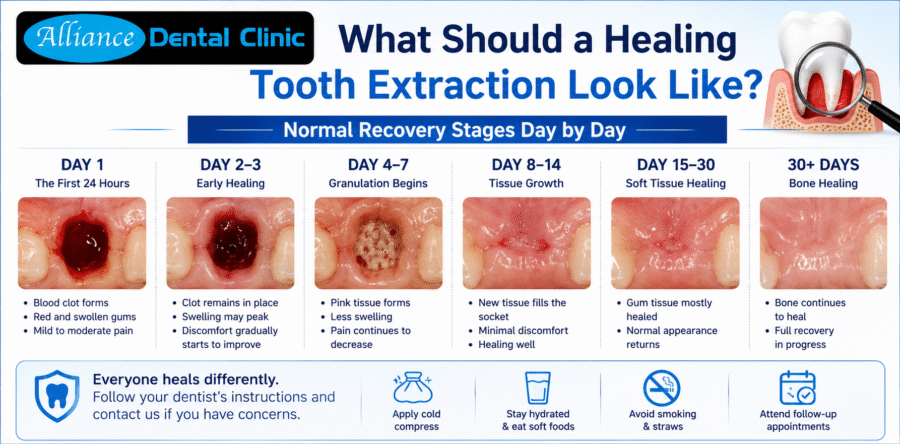
If you’ve recently had a tooth extraction, you’ve probably done what almost everyone does: looked in the mirror, zoomed in with your phone flashlight, and wondered whether the socket looks normal—or like something from a low-budget horror film. At Alliance Dental Milton, this is one of the questions our patients ask us most often in the days after a tooth removal.
The truth is, a healing extraction site can look strange even when it’s healing exactly as it should. It may appear dark red at first, then white or yellowish a few days later, and still look like a small hole for weeks. That doesn’t always mean something is wrong.
Quick Answer: What Should a Healing Tooth Extraction Look Like?
A healing tooth extraction site usually starts with a dark red blood clot during the first 24 hours. Over the next few days, mild swelling, tenderness, and a white or yellow healing layer can appear. By 1 to 2 weeks, the gum often looks pinker, the socket looks smaller, and discomfort should gradually improve. A visible hole can remain for several weeks, especially after a molar or surgical tooth extraction.
In this guide, we’ll break down normal tooth extraction healing day by day, what’s typical after tooth removal, how recovery differs after a dental extraction versus a surgical tooth extraction, and when symptoms may point to dry socket or infection.
Tooth Extraction Healing Timeline: Day-by-Day Recovery Stages
Healing after tooth extraction is not just about the gums closing. Your body is repairing soft tissue, protecting the exposed area with a blood clot, and gradually rebuilding bone underneath. That’s why the extraction site can change color, shape, and texture over time.
Tooth Extraction Healing Timeline at a Glance
| Recovery Stage | What the Extraction Site May Look Like | What You May Feel |
| First 24 hours | Dark red blood clot, mild bleeding or oozing, swollen gums | Numbness fading, soreness, mild bleeding |
| Days 2–3 | Blood clot still visible, swelling may increase, white/yellow film may appear | Peak soreness, jaw tenderness, swelling |
| Days 4–7 | White, cream, or pale yellow healing tissue; socket still open | Pain should start improving, mild sensitivity |
| Week 2 | Pinker gums, less swelling, socket looks smaller but may still be visible | Less pain, easier chewing, improved comfort |
| Weeks 3–4 | Gum tissue continues closing, socket becomes shallower | Minimal discomfort, occasional food trapping |
| 1–3 months | Gum surface usually healed, deeper bone still filling in | Little to no pain; gradual full healing |
Day 1 After Tooth Extraction: Blood Clot Formation
The first 24 hours are the most important stage of tooth extraction healing because your body is forming a blood clot in the empty socket. That clot acts like a protective seal over the exposed bone and nerves.
What a normal healing tooth extraction may look like on Day 1
- a dark red or maroon blood clot in the socket
- mild bleeding or pink saliva for several hours
- swollen or tender gum tissue around the extraction area
- slight bruising in some cases
- stitches, if you had a surgical tooth extraction
What you may feel
- numbness wearing off
- mild to moderate discomfort
- pressure in the extraction area
- tenderness when swallowing or moving your jaw
The socket may not look “clean” or pretty—and that’s fine. A dark clot is usually a good sign.
What to avoid on Day 1
To protect the blood clot after tooth removal, avoid:
- drinking through a straw
- forceful spitting
- smoking or vaping
- rinsing too hard
- touching the socket with your finger or tongue
These habits can dislodge the clot and increase the risk of dry socket.
Days 2–3: Swelling and Peak Soreness
This is often the stage when people worry the most, because the extraction site can look worse before it looks better. Swelling may peak around day 2 or 3, especially after a surgical tooth extraction or removal of a back tooth.
What a healing tooth extraction may look like on Days 2–3
- the blood clot is still present, though it may look darker or more compact
- swelling around the gums or cheek may be more noticeable
- the socket may appear deep or uneven
- a white, cream, or pale yellow layer may begin forming over the area
That white or yellow film is often granulation tissue or fibrin—a normal part of healing after dental extraction. It is not automatically a sign of infection.
What you may feel
- soreness that peaks during this stage
- jaw stiffness
- discomfort when chewing
- mild bad taste from healing fluids
- tenderness around the extraction site
If the pain is manageable and not suddenly worsening, this stage is usually normal.
Days 4–7: The “Why Does It Look White?” Stage
This is the phase where many people search things like:
- “Why is my tooth extraction hole white after 5 days?”
- “Is yellow stuff in tooth extraction socket normal?”
- “Why does my healing tooth extraction look weird?”
Short answer: because healing tissue often looks white, cream, or pale yellow before the gum turns pink again.
What a normal tooth extraction site may look like during Days 4–7
- less dark red clot and more white or creamy healing tissue
- pink gum edges slowly tightening around the socket
- reduced swelling compared with earlier in the week
- a visible hole that still looks open
What you may feel
- pain should start easing, not getting worse
- the area may still feel tender when eating
- some sensitivity while rinsing
- food may collect in the socket, especially after molar tooth extraction
A visible socket does not mean the extraction failed to heal. It often just means the tissue is still rebuilding.
Week 2: The Socket Looks Smaller, But It May Still Be Open
By the second week, many extraction sites look calmer and pinker. However, the gum may not be fully closed yet—especially after a molar tooth removal or surgical tooth extraction.
What normal healing may look like in Week 2
- pinker gum tissue
- less white healing film
- reduced swelling
- a smaller, shallower socket
- a tiny hole or indentation still visible
What you may feel
- less pain than the first week
- easier chewing on the opposite side
- mild sensitivity if food or your toothbrush gets close to the area
If pain, swelling, and tenderness are all improving, the site is usually healing as expected.
Weeks 3–4: Surface Healing Improves
By this stage, the gum tissue often looks much more normal, but the socket may still not be fully filled in. This is especially common after extraction of a large molar or after a more difficult dental extraction.
What’s usually normal at this stage
- healthy pink gum tissue
- little or no swelling
- a smaller socket that still catches food sometimes
- mild awareness of the area but little real pain
This is also when many people think the healing should be “done.” In reality, soft tissue may look healed before the deeper bone underneath finishes remodeling.
1 to 3 Months: The Hole Gradually Fills In
A tooth extraction can feel healed long before the socket fully fills in. Gum tissue closes first, but bone healing takes much longer.
During this stage
- the gum surface often looks mostly healed
- the visible hole continues to shrink
- tenderness should be gone
- the bone underneath slowly fills in and smooths out
For a simple front tooth extraction, the site may appear healed sooner. For a molar or surgical tooth extraction, the area can take several weeks to months to fully remodel. If a missing tooth is left unreplaced for a long time, patients sometimes ask us about longer-term options such as dental implants once the socket has finished healing.
What Is Normal After a Tooth Extraction?
A healthy healing tooth extraction does not always look pretty—but it usually follows a clear pattern.
Normal signs after tooth extraction
- a blood clot forms in the first 24 hours
- mild bleeding or pink saliva settles down quickly
- swelling peaks around days 2 to 3 and then improves
- white or yellow healing tissue appears during the first week
- pain gradually gets better, not worse
- the hole slowly gets smaller over time
The key is progress. If each day feels slightly easier than the last, that’s generally reassuring. This pattern is consistent with the Canadian Dental Association’s care after minor oral surgery guidance, which outlines the same gradual improvement in pain, bleeding, and swelling.
What Does a Dry Socket Look Like vs Normal Healing?
Dry socket is one of the most common worries after tooth removal, and it usually develops when the blood clot comes out too early or never forms properly.
Normal tooth extraction healing
- dark clot in the early stage
- white or cream healing tissue after a few days
- soreness that slowly improves
- swelling that gradually goes down
Dry socket symptoms
- severe throbbing pain, often starting 2 to 4 days after extraction
- pain that radiates to the ear, temple, or jaw
- an empty-looking socket or visible bone
- bad taste or bad breath
- pain that feels much worse instead of better
Not every white socket is dry socket. In many cases, that white layer is normal healing tissue. The bigger clue is pain that worsens instead of improving. According to Alberta Health Services’ patient care instructions for tooth extraction, a dry socket can last several days and cause severe pain, so it should be treated by a dentist rather than managed at home.
Signs of Infection After Tooth Extraction
Some discomfort, swelling, and odd-looking tissue are normal after a dental extraction. But infection symptoms usually go beyond normal healing.
Call a dentist if you notice:
- fever
- swelling that keeps increasing after the first few days
- pus or thick discharge from the socket
- foul smell that doesn’t go away
- severe pain that is not improving
- trouble swallowing or opening your mouth
- redness spreading into the cheek or jaw area
If you’re unsure whether you’re seeing normal healing or a complication, it’s always safer to ask. The Canadian Dental Association’s oral health complications resource outlines similar warning signs and when a dental complication needs prompt professional attention. If you’re near Milton, our team can also arrange emergency dental care if symptoms appear outside of a scheduled follow-up.
Healing After Simple vs Surgical Tooth Extraction
Not every tooth extraction heals the same way.
Simple tooth extraction
A simple extraction is done when the tooth is fully visible and can be removed without cutting into the gum. Healing is often quicker, with less swelling and soreness.
Surgical tooth extraction
A surgical tooth extraction is more complex and may involve:
- lifting the gum tissue
- removing bone around the tooth
- sectioning the tooth into smaller pieces
- placing stitches afterward
Because of that, healing after surgical tooth extraction may involve:
- more swelling and bruising
- a longer recovery period
- more jaw stiffness
- a slower timeline for the socket to close
So if your healing seems slower after a surgical procedure, that doesn’t automatically mean something is wrong. If a tooth was too damaged to remove safely with a simple extraction, our team can also walk you through alternatives such as root canal treatment when the tooth may still be saveable.
Tooth Extraction Aftercare Tips to Support Healing
The goal after tooth extraction is simple: protect the clot, keep the area clean, and avoid anything that delays healing.
Helpful recovery tips
- rest during the first 24 hours
- use gauze exactly as instructed
- apply a cold compress if your dentist recommends it
- eat soft foods such as yogurt, mashed potatoes, eggs, oatmeal, or soup once it has cooled
- drink water regularly
- brush the rest of your teeth gently
- rinse with salt water only when your dentist says it’s safe to start
Common mistakes that can slow healing
- smoking or vaping
- drinking through a straw
- spitting forcefully
- eating hard or crunchy foods too early
- poking the socket with your tongue
- skipping aftercare instructions after tooth removal
Expert Insight: These aftercare steps line up closely with the Canadian Dental Association’s published guidance on caring for the mouth after minor oral surgery—protect the clot, manage swelling gently, and avoid anything that disturbs the healing tissue. At Alliance Dental Milton, we walk every patient through a printed aftercare sheet before they leave the chair, so nothing is left to guesswork. — Alliance Dental Team
When Should You Worry About a Healing Tooth Extraction?
You should contact a dentist if:
- pain suddenly becomes severe after a few days
- the socket looks empty and pain is intense
- swelling gets worse instead of better
- you have fever, pus, or a foul odor
- bleeding doesn’t slow down
- you cannot eat, drink, or sleep because of the pain
A healing tooth extraction can look unusual, but it should still follow a pattern of steady improvement.
Explore More Dental Services at Alliance Dental Milton
Whether you’re recovering from a recent extraction or planning ahead for a tooth that may need to come out, Alliance Dental Clinic in Milton offers comprehensive care for the whole family. In addition to extractions, our full range includes:
- General and cosmetic dentistry services — a complete overview of the treatments available at our Milton clinic
- Dental crowns and bridges — restoring a damaged tooth or replacing a missing one
- Invisalign clear aligners — straightening remaining teeth after extractions for orthodontic reasons
- Meet our dental team — learn more about the dentists caring for patients across Milton
Final Thoughts
A healing tooth extraction site can look darker, whiter, deeper, or stranger than most people expect. That’s one reason so many patients end up staring into the bathroom mirror trying to decide whether they’re healing normally or auditioning for a dental emergency.
In most cases, normal healing starts with a blood clot, followed by swelling and tenderness, then white or yellow healing tissue, and finally pinker gums as the socket gradually closes. A visible hole can remain for weeks—especially after molar tooth removal or surgical tooth extraction—and that alone is not usually a problem.
The best way to judge recovery is not by one photo or one odd color change. It’s by the overall trend. If pain is improving, swelling is going down, and the socket looks a little calmer over time, your tooth extraction is probably healing as expected. But if pain suddenly worsens, the socket looks empty, or you notice fever, pus, or a bad smell, it’s worth contacting a dental professional rather than trying to solve the mystery with Google and a flashlight.
Note: This article is for educational purposes only and does not replace an in-person dental examination. Healing can vary depending on the tooth removed, the complexity of the extraction, your medical history, and how closely aftercare instructions are followed.
FAQs About Tooth Extraction Healing
1. What should a tooth extraction look like after 3 days?
After 3 days, a healing tooth extraction may still look dark red in some areas, but it may also develop a white or pale yellow layer. Mild swelling, tenderness, and jaw soreness are still common at this stage, especially after a surgical tooth extraction.
2. Why is my tooth extraction hole white after 5 days?
A white or cream-colored layer is often part of normal healing after dental extraction. It may be fibrin or granulation tissue covering the socket. If it appears with severe pain, bad smell, fever, or swelling that worsens, it should be checked.
3. How long does it take for a tooth extraction hole to close?
Most tooth extraction sites start closing noticeably within 1 to 2 weeks, but deeper sockets can take longer. After a molar tooth removal or surgical tooth extraction, the hole may remain visible for several weeks while deeper bone healing continues.
4. How do I know if I have dry socket or normal healing?
Normal healing gets gradually less painful over time. Dry socket usually causes severe throbbing pain 2 to 4 days after tooth extraction, often with an empty-looking socket, bad taste, or pain radiating toward the ear or jaw.
5. When should I worry about a tooth extraction not healing properly?
You should contact a dentist if you have worsening pain after the first few days, fever, pus, increasing swelling, heavy bleeding, or a bad smell from the extraction site. Those symptoms may suggest infection or dry socket rather than normal healing. If you’re in the Milton area, you can book a consultation with Alliance Dental Milton to have it checked promptly.

