
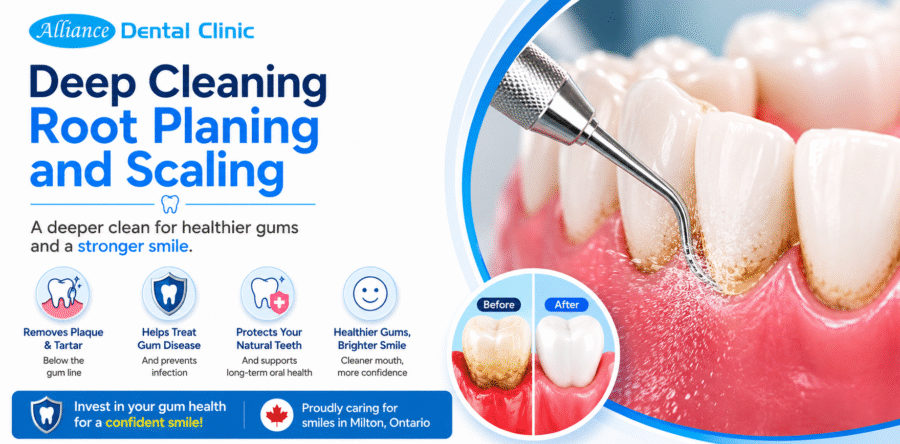
Deep Cleaning, Root Planing and Scaling at Alliance Dental Clinic Milton
If your dentist has recently recommended deep cleaning root planing and scaling, you are not alone. Millions of people develop gum disease at some point in their lives, and this treatment is one of the most effective, non-surgical ways to stop it before it causes serious damage to your teeth and jawbone.
At Alliance Dental Clinic in Milton, Ontario, our dental team performs scaling and root planing for patients who show signs of gum disease, deep periodontal pockets, or persistent tartar buildup that cannot be addressed with a regular cleaning. This guide explains everything you need to know — from what root planing and scaling actually involves to what recovery looks like and when you should book an appointment.
What Is Root Planing and Scaling?
Root planing and scaling is a deep dental cleaning procedure used to treat gum disease. Unlike a routine dental cleaning that focuses on the visible surfaces of your teeth, scaling and root planing goes below the gumline to remove plaque, tartar, and bacterial deposits from the root surfaces of your teeth.
The procedure has two distinct components that work together:
- Dental scaling removes hardened tartar and plaque from the tooth surface and beneath the gumline
- Root planing smooths the root surface of the tooth so that gum tissue can reattach properly and bacteria have fewer places to cling
Together, these two steps form a single, comprehensive treatment known as deep cleaning. It is the first line of defence when gum disease has progressed beyond what a standard hygiene appointment can address.
What Is Dental Scaling?
Dental scaling is the process of physically removing tartar and plaque deposits from tooth surfaces. Your dental hygienist or dentist uses specialized instruments — either manual scalers or an ultrasonic scaler — to carefully clear away the buildup that has accumulated both above and below the gumline.
When plaque is not removed through daily brushing and flossing, it hardens into calculus, which is commonly called tartar. Once tartar forms, it cannot be removed with a toothbrush. Only a dental professional can scale it away safely.
Scaling teeth is a routine part of every dental cleaning, but in the context of deep cleaning, it extends further below the gumline into the periodontal pocket — the space between your tooth and gum that deepens as gum disease progresses.
What Is Root Scaling or Dental Root Planing?
Root scaling and dental root planing are terms that many patients use interchangeably, though they describe the same core idea — cleaning and smoothing the root surfaces of your teeth.
When gum disease develops, bacteria embed themselves into the rough surface of your tooth roots. What is root scaling in practical terms? It is the careful removal of those embedded bacteria and bacterial toxins from the root structure itself, followed by smoothing the surface so it becomes inhospitable to future bacterial buildup.
A smooth root surface allows your gum tissue to reattach to the tooth and reduces the depth of the periodontal pocket over time. This is why dental root planing is such a critical step — scaling alone removes the deposit, but planing ensures the underlying surface supports long-term healing.
Scaling Teeth: What Does It Mean and Why Does It Matter?
Scaling teeth means cleaning the tooth surface and root zone with precision instruments to remove harmful bacterial buildup. The reason it matters so much is tied directly to how gum disease develops and spreads.
Gum disease, known clinically as periodontitis, begins when plaque bacteria irritate the gum tissue. Over time, the gums pull away from the teeth, forming pockets. These pockets trap more bacteria, the infection deepens, and without treatment, the supporting bone around your teeth begins to break down.
Scaling teeth interrupts this cycle. By removing the source of infection — tartar and bacteria — the gums can begin to heal, and further bone loss can be slowed or prevented.
At Alliance Dental Clinic, our team evaluates each patient’s pocket depth measurements, gum health, and X-ray findings before recommending scaling and root planing. The goal is always to protect your natural teeth for as long as possible.
Who Needs Deep Cleaning Root Planing and Scaling?
Not every patient requires deep cleaning. Your dentist will typically recommend scaling and root planing when certain clinical signs are present during your examination.
Common reasons your dentist may recommend this treatment include:
- Periodontal pockets measuring 4 mm or deeper
- Visible tartar buildup below the gumline on X-rays
- Bleeding gums that do not improve with regular cleaning
- Gum recession or gums pulling away from the teeth
- Chronic bad breath caused by bacterial infection
- Loose teeth or shifting bite caused by bone loss
- A diagnosis of gingivitis that has progressed to early periodontitis
If any of these sound familiar, it is worth speaking with your dentist at Alliance Dental Clinic in Milton as soon as possible. Early intervention almost always leads to better outcomes.
How Is the Deep Cleaning Procedure Performed?
Understanding what happens during your appointment can make the experience far less intimidating. Here is a clear, step-by-step walkthrough of how deep cleaning root planing and scaling is typically performed at Alliance Dental Clinic.
Step 1: Periodontal Assessment
Before treatment begins, your dentist or dental hygienist measures the depth of the pockets around each tooth using a small probe. This helps determine which areas require deep cleaning and how severe the gum disease is.
Step 2: Local Anaesthesia
Because scaling and root planing reaches below the gumline, local anaesthetic is applied to keep you comfortable throughout the procedure. Most patients feel little to no discomfort once the area is numbed.
Step 3: Dental Scaling
Your hygienist or dentist uses an ultrasonic scaler or hand instruments to remove calculus and plaque from the tooth surface and deep into the periodontal pocket. This is the dental scaling phase of treatment.
Step 4: Root Planing
Once the tartar is cleared, the root surface of each tooth is carefully smoothed using fine curettes. This dental root planing step removes any remaining bacteria, toxins, and rough areas that would otherwise allow plaque to reaccumulate quickly.
Step 5: Antibacterial Rinse or Medication
In some cases, your dentist may apply an antibacterial rinse or place a topical antibiotic directly into the treated pockets to further reduce bacterial activity and support healing.
Step 6: Follow-Up Appointment
A follow-up visit is usually scheduled four to six weeks after treatment to assess how well the gum tissue has responded and measure whether pocket depths have decreased.
Treatment is often completed in two appointments — one for each side of the mouth — to allow the anaesthetic to wear off and make the session more manageable for patients.
Scaling and Root Planing vs Regular Cleaning: What Is the Difference?
Many patients wonder why a regular cleaning is not enough. The answer comes down to depth and purpose.
A standard prophylaxis cleaning is a preventive procedure that maintains healthy gums. It removes plaque and tartar from the crown of the tooth and just slightly below the gumline — typically in pockets no deeper than 3 mm.
Scaling and root planing is a therapeutic treatment for active gum disease. It reaches pockets of 4 mm or deeper, smooths the roots, and addresses the bacterial infection causing tissue damage.
Think of it this way: a regular cleaning maintains health, while deep cleaning root planing and scaling restores health when disease has already taken hold.
Comparison Table: Regular Cleaning vs Deep Cleaning
| Feature | Regular Cleaning | Scaling and Root Planing |
|---|---|---|
| Purpose | Preventive maintenance | Treat active gum disease |
| Depth of cleaning | Above and just below gumline | Deep into periodontal pockets |
| Anaesthetic required | Usually not | Yes, local anaesthetic |
| Number of appointments | Single visit | Usually 2 visits |
| Root surface treatment | No | Yes, root planing included |
| Follow-up required | 6-month recall | 4–6 week reassessment |
| Indicated for | Healthy or mild gingivitis | Periodontitis, deep pockets |
What to Expect After Scaling and Root Planing
Recovery after deep dental cleaning is generally straightforward. Most patients return to their normal routine the same day or the following morning.
Common experiences in the days following treatment include:
- Tooth sensitivity to hot and cold temperatures
- Mild soreness or tenderness in the gums
- Minor bleeding when brushing for the first day or two
- Gums appearing slightly receded as swelling decreases
These symptoms are entirely normal and typically resolve within a few days to a week. Over-the-counter pain relievers and saltwater rinses are usually sufficient to manage discomfort.
What to Eat After Deep Cleaning
Following your deep cleaning appointment, it helps to be mindful of what you eat while your gums are still sensitive.
Foods that are comfortable to eat after scaling and root planing:
- Yogurt and soft dairy
- Scrambled eggs
- Mashed potatoes and soft vegetables
- Oatmeal and soft cereals
- Lukewarm soup or broth
- Smoothies consumed without straws
Foods to avoid for the first 48 to 72 hours:
- Crunchy or hard snacks like chips and nuts
- Spicy or acidic foods
- Very hot beverages
- Alcohol, which can slow healing
- Sticky candies or chewy foods
How Long Does Scaling and Root Planing Take?
The length of each appointment depends on the extent of the gum disease and the number of teeth being treated.
- A single quadrant treatment usually takes 45 minutes to one hour
- A full-mouth treatment completed over two appointments is typically one to one and a half hours per visit
Your dentist at Alliance Dental Clinic will give you a clear estimate during your initial assessment so you can plan accordingly.
Does Scaling and Root Planing Hurt?
This is one of the most common questions patients ask before their appointment, and it is a completely fair concern.
The honest answer is that the procedure itself is not painful because local anaesthetic is used to numb the area being treated. You may feel pressure and vibration during scaling, but sharp pain should not occur. If at any point you feel discomfort, let your dental professional know immediately so the anaesthetic can be adjusted.
After the anaesthetic wears off, you may notice some soreness and sensitivity. This is temporary and is a sign that your gum tissue is beginning to heal. Most patients find the discomfort very manageable with standard over-the-counter pain relief.
Benefits of Scaling and Root Planing
When performed at the right stage of gum disease, deep cleaning delivers significant benefits that go well beyond fresher breath or cleaner-looking teeth.
- Stops the progression of periodontal disease
- Reduces periodontal pocket depth over time
- Allows gum tissue to reattach to the tooth root
- Slows or prevents further bone loss
- Reduces chronic oral inflammation
- Helps preserve natural teeth long term
- Lowers the bacterial load linked to systemic health conditions
- Improves oral hygiene effectiveness going forward
Research consistently shows a strong connection between periodontal disease and systemic health conditions including cardiovascular disease, diabetes, and respiratory illness. Treating gum disease through scaling and root planing is not just about your mouth — it is an investment in your overall health.
Tips to Prevent Needing Deep Cleaning Again
The best outcome after scaling and root planing is never needing it again. That is entirely possible for most patients, but it requires consistent habits and honest self-awareness about your oral health. Here are the most practical tips our team at Alliance Dental Clinic shares with patients after deep cleaning treatment.
Tip 1: Brush Along the Gumline, Not Just the Teeth
Most people brush the surface of their teeth but miss the gumline entirely. This is exactly where plaque and bacteria accumulate and cause periodontal pockets to form. Hold your toothbrush at a 45-degree angle to the gumline and use short, gentle circular strokes. Do this for a full two minutes, twice a day, every single day.
Tip 2: Floss Every Day Without Exceptions
Flossing is the single most effective thing you can do between visits to prevent gum disease from returning. A toothbrush simply cannot reach the spaces between your teeth and below the gumline. If traditional floss is difficult to manage, interdental brushes or a water flosser are equally effective alternatives. The key is using something every day.
Tip 3: Do Not Skip Your Periodontal Maintenance Appointments
After deep cleaning, your dentist at Alliance Dental Clinic will recommend more frequent recall visits — typically every three to four months rather than six. This shorter interval exists for a reason. It keeps bacterial levels below the threshold where gum disease can restart. Skipping even one of these appointments can allow pockets to deepen again more quickly than most patients expect.
Tip 4: Quit Smoking or Using Tobacco Products
Tobacco use is one of the strongest risk factors for both developing and redeveloping gum disease. Smoking restricts blood flow to the gum tissue, slows healing, and masks the bleeding that normally signals early gum problems. If you smoke, quitting will have a more significant positive impact on your gum health than almost any other single change you can make.
Tip 5: Manage Your Blood Sugar If You Have Diabetes
Diabetes and gum disease have a well-documented two-way relationship. Poorly controlled blood sugar makes gum disease harder to treat and more likely to return. If you have diabetes, working with your doctor to keep blood glucose levels stable will directly support the healing and long-term health of your gums after scaling and root planing.
Tip 6: Use an Antibacterial Mouthwash
A chlorhexidine or antibacterial mouthwash used once daily after brushing can significantly reduce the bacterial load in areas your brush and floss may not fully reach. Ask your dentist at Alliance Dental Clinic which rinse is best suited to your specific situation, as some formulations are recommended only for short-term use.
Tip 7: Stay Hydrated Throughout the Day
Dry mouth is a surprisingly significant contributor to gum disease. Saliva is your mouth’s natural defence system — it neutralizes acids, washes away bacteria, and remineralizes tooth enamel. Drinking water consistently through the day, especially after meals, keeps your mouth moist and reduces the environment where harmful bacteria thrive.
Tip 8: Replace Your Toothbrush Regularly
A toothbrush with frayed or worn bristles cannot clean effectively along the gumline. Replace your manual brush every three months, or sooner if the bristles splay outward. If you use an electric toothbrush, replace the brush head on the same schedule. It is a small change that makes a meaningful difference over time.
How to Maintain Results After Deep Cleaning
Deep cleaning is not a one-time fix if your home care habits do not change. The long-term success of scaling and root planing depends heavily on what you do between dental visits.
To maintain the results of your treatment:
- Brush twice daily using a soft-bristled toothbrush and fluoride toothpaste
- Floss at least once daily to disrupt bacteria between teeth and below the gumline
- Use an antibacterial mouthwash as recommended by your dentist
- Return for periodontal maintenance appointments, typically every three to four months
- Quit smoking, as tobacco use significantly increases the risk of gum disease recurrence
- Manage underlying health conditions such as diabetes that can affect gum healing
At Alliance Dental Clinic, our team will work with you to build a personalized maintenance plan after your deep cleaning treatment. Learn more through our Preventive Dental Care page.
Warning Signs You May Need Scaling and Root Planing
Gum disease is often called a silent condition because it can progress without causing obvious pain until it has reached an advanced stage. Knowing the early warning signs can help you seek treatment before significant damage occurs.
Talk to your dentist at Alliance Dental Clinic if you notice any of the following:
- Gums that bleed when brushing or flossing
- Gums that appear red, swollen, or tender
- Persistent bad breath that does not improve with brushing
- Gum recession or teeth looking longer than before
- Teeth that feel loose or have shifted position
- Sensitivity that has worsened near the gumline
- Visible dark deposits near the base of the teeth
If you are concerned about any of these symptoms and need urgent assessment, visit our Dental Emergency page to find out how to reach our team quickly.
How Much Does Scaling and Root Planing Cost in Milton, Ontario?
The cost of deep cleaning root planing and scaling varies based on several factors, including the severity of gum disease, the number of teeth involved, whether one or two appointments are needed, and your specific insurance coverage.
Key factors that influence pricing:
- Number of quadrants being treated
- Severity of periodontal disease
- Whether adjunct antibiotic therapy is required
- Your dental insurance plan and annual maximum
Many dental insurance plans in Canada cover a significant portion of scaling and root planing because it is classified as a therapeutic, disease-treating procedure. According to the Canadian Dental Association, periodontal treatment is considered essential oral health care.
Contact Alliance Dental Clinic directly for a personalized treatment estimate and to understand how your coverage applies to your situation.
Scaling and Root Planing Near Me in Milton, Ontario
If you are searching for:
- Scaling and root planing near me
- Deep cleaning dental Milton Ontario
- Root planing and scaling Milton
- Dental scaling near me
Alliance Dental Clinic is a trusted dental provider serving patients across Milton and surrounding communities in Ontario. Our dental team has extensive experience diagnosing and treating gum disease using the most current protocols available.
We understand that recommendations for deep cleaning can feel surprising or worrying. Our team takes the time to explain every aspect of your diagnosis, walk you through the treatment plan, and answer all your questions before any procedure begins. We believe that informed patients heal better and feel more confident throughout their care.
Whether you need a full periodontal assessment, a second opinion on a deep cleaning recommendation, or you are ready to book your treatment, we are here for you.
Pro Tips for a Faster Recovery After Scaling and Root Planing
Recovery from deep cleaning is generally straightforward, but the choices you make in the first few days can meaningfully affect how quickly your gums heal and how comfortable the process feels. These are the recovery tips our team at Alliance Dental Clinic recommends most consistently to patients in Milton.
Tip 1: Wait for the Anaesthetic to Wear Off Before Eating
Wait until the numbness has fully resolved before eating anything after your appointment. Eating while your mouth is still numb means you cannot feel properly, which makes it easy to accidentally bite your cheek or tongue and cause additional irritation to freshly treated gum tissue.
Tip 2: Rinse Gently With Warm Salt Water
Starting the day after your procedure, rinse with warm salt water two to three times daily. This helps reduce inflammation, keeps the treated area clean, and soothes sore gum tissue. Use half a teaspoon of salt dissolved in a glass of warm water and swish gently — there is no need for vigorous rinsing.
Tip 3: Take Pain Relief Proactively
If your dentist recommends an over-the-counter anti-inflammatory such as ibuprofen, take it before the anaesthetic fully wears off rather than waiting until discomfort has already built up. Managing inflammation early is far more effective than trying to reduce it once it has set in.
Tip 4: Brush Gently With a Soft-Bristled Toothbrush
Your gums will be tender after scaling and root planing. Use a soft-bristled toothbrush and be especially gentle around the treated areas for the first week. Do not avoid the area entirely — keeping the site clean actually supports faster healing and lowers the risk of post-treatment infection. Gentle and consistent is the right approach.
Tip 5: Avoid Smoking for at Least 72 Hours
Smoking immediately after deep cleaning is one of the most counterproductive things a patient can do. Tobacco restricts blood flow to the gum tissue, significantly delays healing, and introduces bacteria directly into freshly treated periodontal pockets. Even if you are not ready to quit permanently, avoiding smoking for the first 72 hours will make a noticeable difference in how well your gums recover.
Tip 6: Manage Tooth Sensitivity With the Right Products
Sensitivity to hot and cold temperatures is one of the most common experiences in the week after deep cleaning. The root surfaces, previously covered by tartar or inflamed tissue, are now exposed and reactive to temperature changes. Using a sensitivity toothpaste and avoiding very hot or very cold food and drinks for the first week will make daily life far more comfortable while the gum tissue settles.
Tip 7: Do Not Skip Your Follow-Up Appointment
Your reassessment visit four to six weeks after treatment is one of the most important appointments in the entire process. This is when your dentist at Alliance Dental Clinic will re-measure your periodontal pockets to confirm that healing is on track. If certain areas need additional attention, it is far easier to address them at this early stage than to wait until the disease has progressed further.
Frequently Asked Questions
What is root planing and scaling?
Root planing and scaling is a deep dental cleaning procedure that removes tartar and bacteria from below the gumline and smooths the root surfaces to help gum tissue heal and reattach to the tooth.
What is dental scaling?
Dental scaling is the removal of hardened tartar and plaque deposits from the tooth surface and below the gumline using specialized dental instruments. It is a core part of both regular and deep cleaning appointments.
What is root scaling?
Root scaling refers to the process of cleaning the root surface of the tooth below the gumline to remove calculus and bacterial deposits that contribute to gum disease and periodontal pocket formation.
What does scaling teeth mean?
Scaling teeth means using dental instruments to carefully scrape away plaque and tartar from tooth surfaces, including the areas beneath the gum tissue that a toothbrush cannot reach.
What is dental root planing?
Dental root planing is the smoothing of tooth root surfaces after scaling. A smooth root discourages bacteria from reattaching and helps the gum tissue reconnect to the tooth in a healthier position.
How many appointments does deep cleaning take?
Most patients complete scaling and root planing over two appointments, with each visit treating one side of the mouth. A follow-up reassessment is then scheduled four to six weeks later.
Is deep cleaning painful?
The procedure itself is performed under local anaesthetic, so discomfort during treatment is minimal. Some tenderness and sensitivity in the days following the appointment is normal and usually resolves within a week.
How often do I need scaling and root planing?
After completing deep cleaning treatment, most patients transition to a periodontal maintenance schedule of every three to four months rather than the standard six-month recall. This frequency keeps the gum disease under control long term.
Can gum disease come back after scaling and root planing?
Yes, it can if home care and regular professional maintenance are not maintained. However, with consistent brushing, flossing, and periodontal maintenance visits at Alliance Dental Clinic, the majority of patients are able to keep gum disease well managed for many years.
Final Thoughts
Deep cleaning root planing and scaling is one of the most effective treatments available for managing gum disease and protecting your natural teeth. When performed at the right time and followed by proper home care, it can make a profound difference in your oral and overall health.
Understanding what root planing and scaling involves, what dental scaling means for your gum health, and what to expect during recovery helps you approach treatment with confidence rather than anxiety.
At Alliance Dental Clinic in Milton, Ontario, our experienced dental team is committed to giving every patient honest, evidence-based guidance and compassionate care. If you have been told you need scaling and root planing — or if you are noticing the warning signs of gum disease — we encourage you to book a consultation so we can assess your gum health and talk through your options together.
