
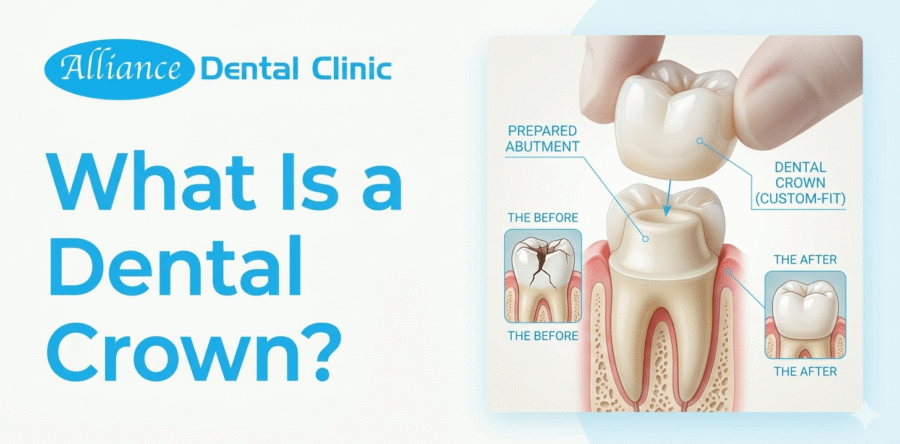
A dental crown is a custom-made cap placed over a damaged or weakened tooth to restore its strength, shape, function, and appearance. It is commonly used after severe decay, root canal treatment, or structural damage.
What Is a Dental Crown and Why Is It Needed?
If you’re wondering what a dental crown is and whether you might need one, you’re not alone. Dental crowns are one of the most common restorative treatments used to protect and strengthen damaged teeth.
When a tooth becomes too weak for a filling or bonding, a crown provides full coverage protection while restoring its natural look and function. Whether due to decay, cracks, or cosmetic concerns, dental crowns play a crucial role in modern dentistry. The Canadian Dental Association recognizes crowns as a primary restorative solution when a tooth can no longer support a filling alone.
What Is a Dental Crown?
A dental crown is a tooth-shaped cap that covers the entire visible portion of a tooth above the gum line. It acts as a protective shell, restoring both function and aesthetics.
Dentists recommend crowns when a tooth is cracked or broken, has severe decay, has undergone root canal treatment, needs support after a large filling, or requires cosmetic enhancement. A properly fitted crown strengthens the tooth and prevents further damage.
Signs You May Need a Dental Crown
1. Cracked or Fractured Tooth
A cracked tooth can worsen over time. A crown stabilizes the structure and prevents further breakage.
2. Severe Tooth Decay
Large cavities weaken the tooth significantly. A crown restores strength when fillings are no longer sufficient. If pain or swelling develops suddenly, that may also signal the need for urgent care — in which case reaching out for dental emergency treatment promptly can prevent further damage.
3. After Root Canal Treatment
Teeth become brittle after root canals. A crown protects and extends the life of the treated tooth. If you have recently undergone or are considering root canal treatment, your dentist will almost always recommend a crown to follow.
4. Large Existing Fillings
Teeth with large fillings are more prone to fracture and benefit from crown coverage.
5. Worn Down Teeth
Grinding (bruxism) or general wear can damage tooth structure significantly over time. Crowns rebuild strength and shape. Consistent preventive dental care can help identify wear early and reduce the likelihood of needing crowns prematurely.
6. Cosmetic Improvement
Crowns improve discolored, uneven, or misshaped teeth. For patients looking to address multiple aesthetic concerns, cosmetic dentistry offers a range of treatments that can be combined with crown placement for a comprehensive smile enhancement.
Dental Bridges and Crowns: How They Work Together
Dental crowns are often used alongside bridges. A dental crown restores a damaged tooth, while a dental bridge replaces missing teeth. In bridge treatments, crowns are placed on adjacent teeth to support artificial teeth. This combination restores both function and aesthetics. You can learn more about crowns and bridges and how they are used together as part of a full restorative plan.
Types of Dental Crowns
- Porcelain Crowns — Natural appearance, ideal for front teeth, highly aesthetic.
- Ceramic Crowns — Metal-free option, biocompatible, excellent for visible areas.
- Metal Crowns — Extremely durable, best for molars, long-lasting under heavy pressure.
- Porcelain-Fused-to-Metal (PFM) — Combines strength and aesthetics, common in restorative dentistry.
- Composite Crowns — Cost-effective, often used temporarily.
Choosing the right type depends on your dental needs and tooth location.
Best Dental Crown Materials Explained
The durability and appearance of a crown depend on the material used. Common dental crown materials include porcelain, ceramic, metal alloys, porcelain fused to metal, and composite resin.
Dentists choose materials based on tooth location (front vs. molar), bite pressure, aesthetic preference, and overall oral health condition. According to Health Canada’s oral health guidelines, material selection in restorative dentistry should account for both function and long-term biocompatibility. Porcelain and ceramic are preferred for aesthetics, while metal is ideal for strength in high-pressure areas.
Dental Crowns for Implants
Dental crowns are also a core component of implant treatments. The process includes implant placement in the jawbone, abutment attachment, and custom crown placement. This creates a natural-looking and fully functional tooth replacement. If you are considering this option, learning more about dental implants can help you understand the full treatment timeline and what to expect.
Dental Crown Procedure: Step-by-Step
First Visit — Preparation
The tooth is reshaped, a digital scan or impression is taken, and a temporary crown is placed.
Second Visit — Final Placement
The temporary crown is removed, the permanent crown is fitted and bonded, and the bite is adjusted for comfort. The procedure is safe, efficient, and highly effective.
Dental Crown Cost: What Influences It
Many patients ask about dental crown cost, but pricing varies based on material used, procedure complexity, lab customization, and whether additional treatments are required. The Ontario Dental Association publishes an annual fee guide that provides a general reference for dental procedure costs in Ontario. Since every case is unique, the best way to determine cost is through a personalized consultation.
Benefits of Dental Crowns
- Strength and Protection — Protects weak teeth from further damage.
- Natural Appearance — Blends seamlessly with surrounding teeth.
- Long-Term Durability — Can last many years with proper care.
- Versatility — Used for both restorative and cosmetic treatments.
How to Care for Dental Crowns
To extend the life of your crown, brush twice daily, floss regularly, avoid hard foods, and visit your dentist consistently. Good oral hygiene ensures long-lasting results.
Contact Us
Whether you need a crown for restorative or cosmetic reasons, the team at Alliance Dental in Milton is here to help. We serve patients of all ages across Milton and the surrounding area. Book an appointment today and get a personalized consultation and treatment plan tailored to your dental needs. For families looking for comprehensive care under one roof, our family dentistry in Milton practice covers everything from routine checkups to full restorative work.
Frequently Asked Questions
What is a dental crown used for?
A dental crown is used to restore damaged teeth, protect weak teeth, cover implants, support bridges, and improve appearance.
How much does a dental crown cost?
The cost varies based on materials and treatment complexity. It is best to consult a dentist for a personalized estimate.
Does getting a dental crown hurt?
The procedure is generally painless. Some mild sensitivity may occur but usually subsides quickly.
Which dental crown material is best?
Porcelain and ceramic are best for aesthetics, while metal crowns are ideal for durability in molars.
Can a crown be placed on a molar?
Yes, crowns are commonly used on molars to handle strong chewing forces and prevent damage.
